Natural History Notes from the Mossy Forests of Mt. Kalatungan
Most hikers remember mountains by their summits.
They remember the elevation, the difficulty, the weather, the photographs taken at the highest point. Years later, when stories are retold, the summit becomes the symbol of the entire journey.
Yet when I look back on our climb of Mt. Kalatungan, I find that my strongest memories lie elsewhere.
I remember the forest.
Not the trail. Not the summit marker. Not even the accomplishment of reaching one of Mindanao’s highest mountains.
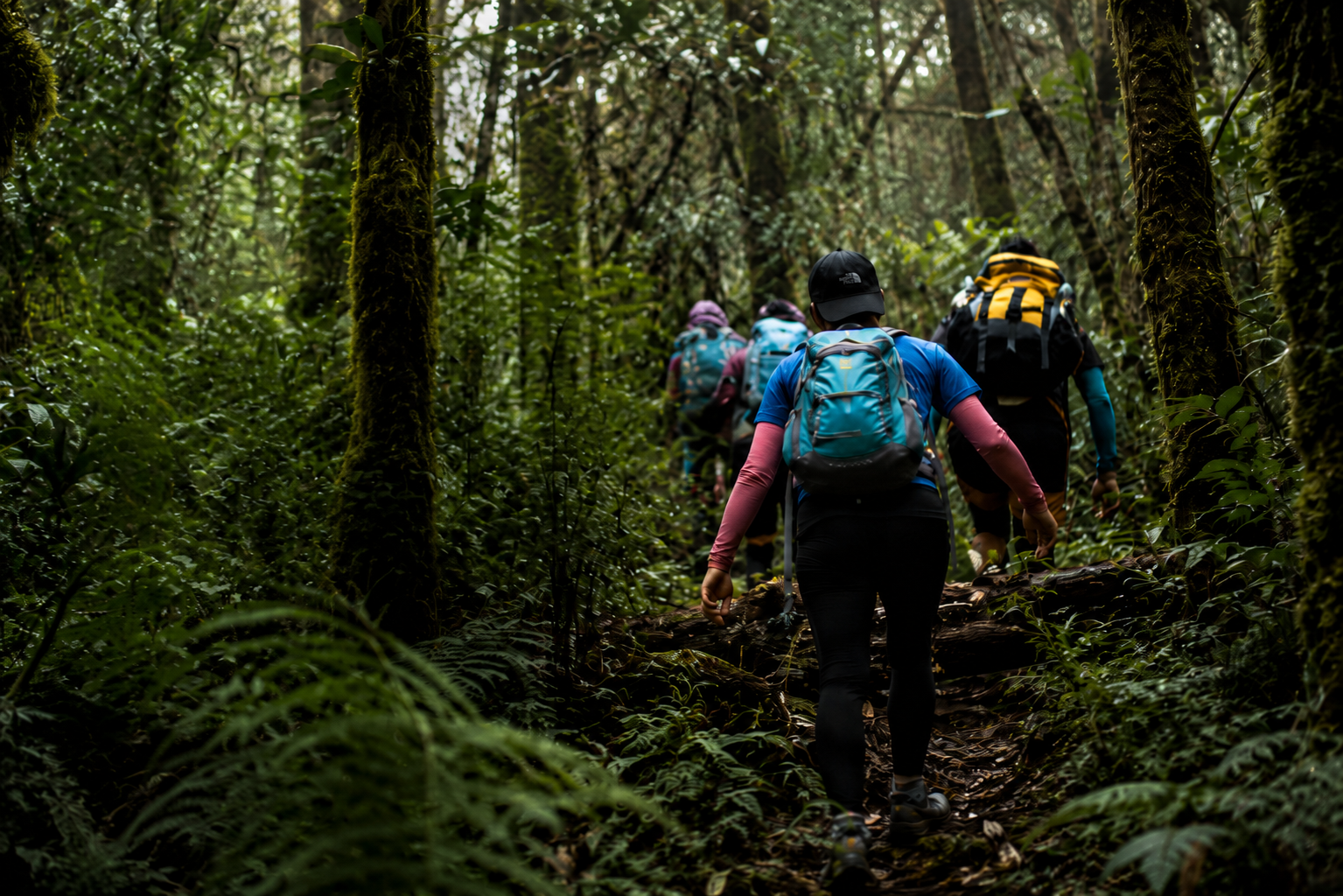
What remains vivid are the moss-covered trees, the orchids clinging to ancient branches, the strange fungi emerging from decaying wood, and the feeling of walking through a landscape that seemed untouched by ordinary time.
Years before I became an orthopedic surgeon, I studied biology. Like many students, I learned taxonomy, ecology, and evolution in classrooms and laboratories. Yet it was only much later, carrying a backpack through the mountains, that many of those lessons began to feel real.
Kalatungan was one of those places.
It was not simply a mountain. It was an ecosystem.
And every step upward revealed another small wonder.
A Mountain Above the Clouds
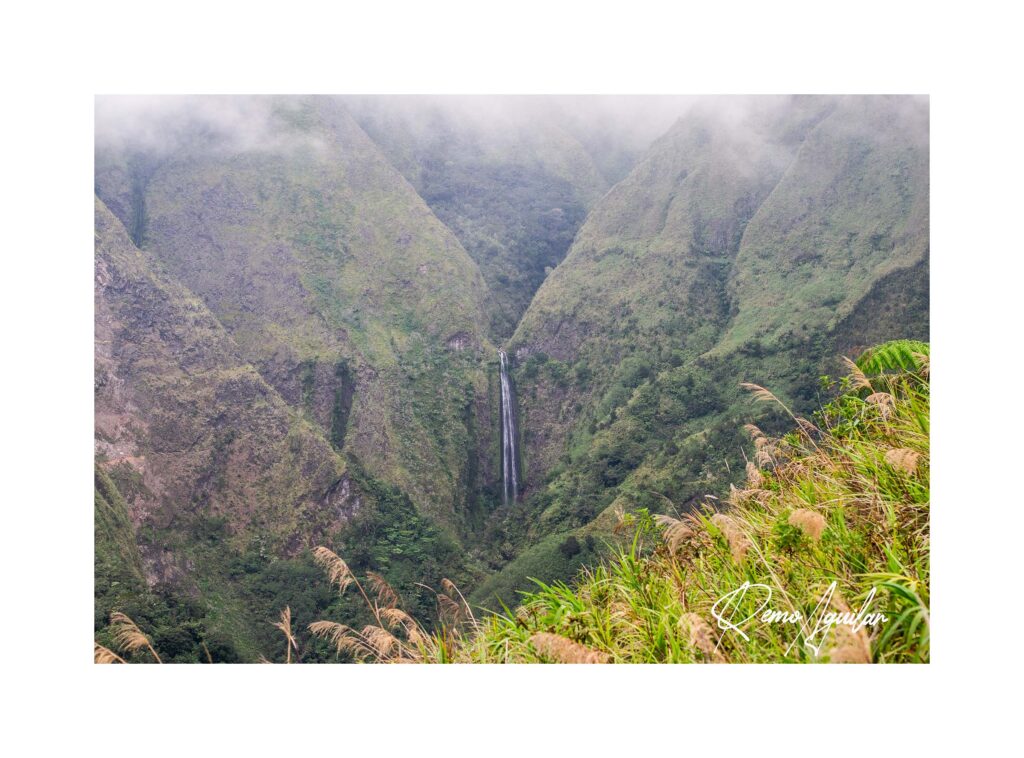
The Kalatungan Range dominates the interior of Bukidnon, forming one of the most important remaining forest landscapes in Mindanao.
Steep ridges, deep valleys, waterfalls, grasslands, montane forests, and mossy forests combine to create a remarkable diversity of habitats. As elevation increases, temperature drops, moisture increases, and vegetation changes dramatically.
The mountain teaches ecology through experience.
You do not merely learn about ecological zones.
You walk through them.
From cultivated foothills and secondary forests, the trail gradually climbs into increasingly cool and humid environments. Trees become shorter. Moss becomes thicker. Epiphytes become more abundant. The air itself seems heavier with moisture.
By the time hikers reach the upper elevations, they enter an entirely different world.
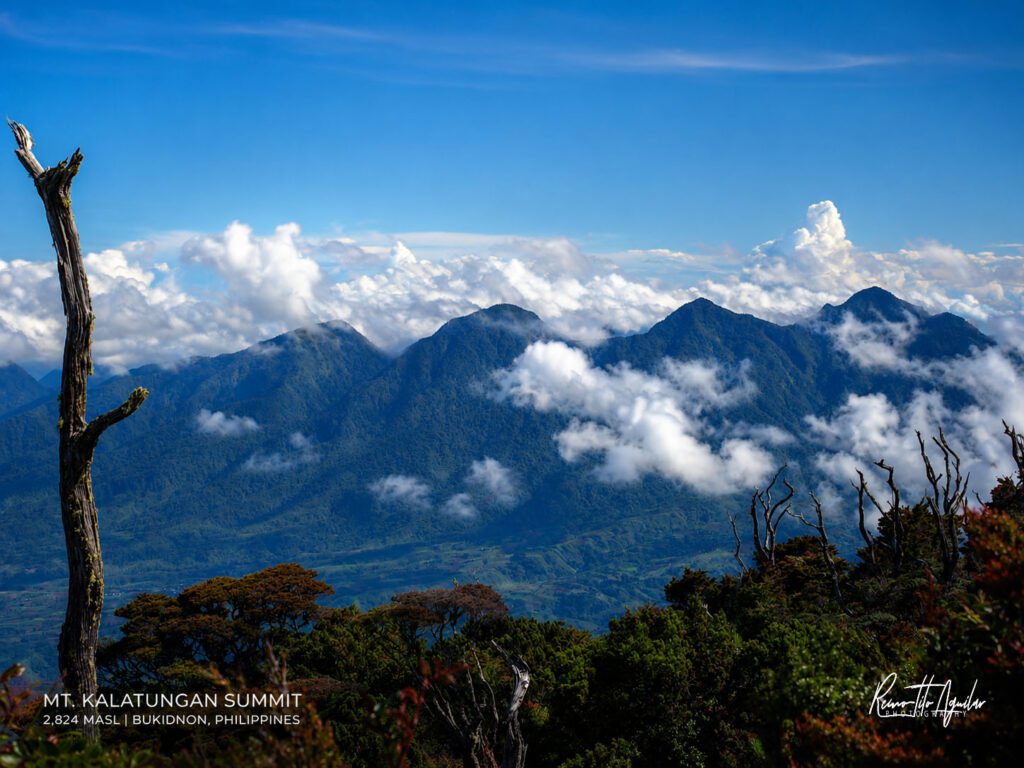
The summit may offer expansive views of Mindanao’s mountains and valleys, but what fascinated me most was what happened below the canopy.
That was where the real discoveries began.
Entering the Mossy Forest
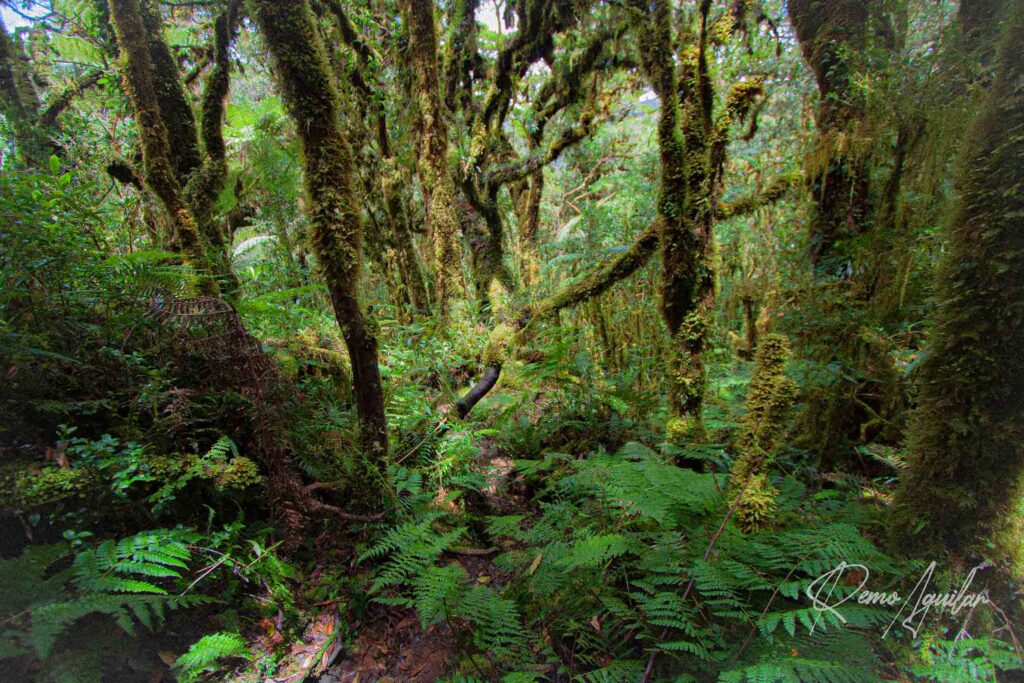
There is a moment in many high-elevation Philippine mountains when the forest suddenly changes character.
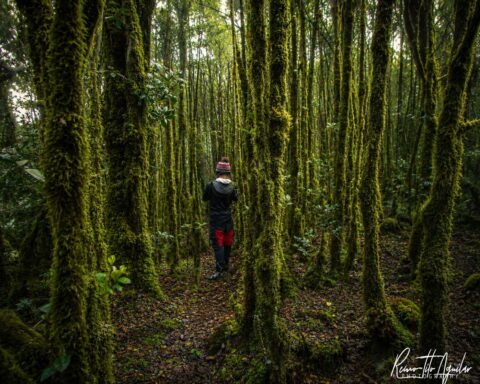
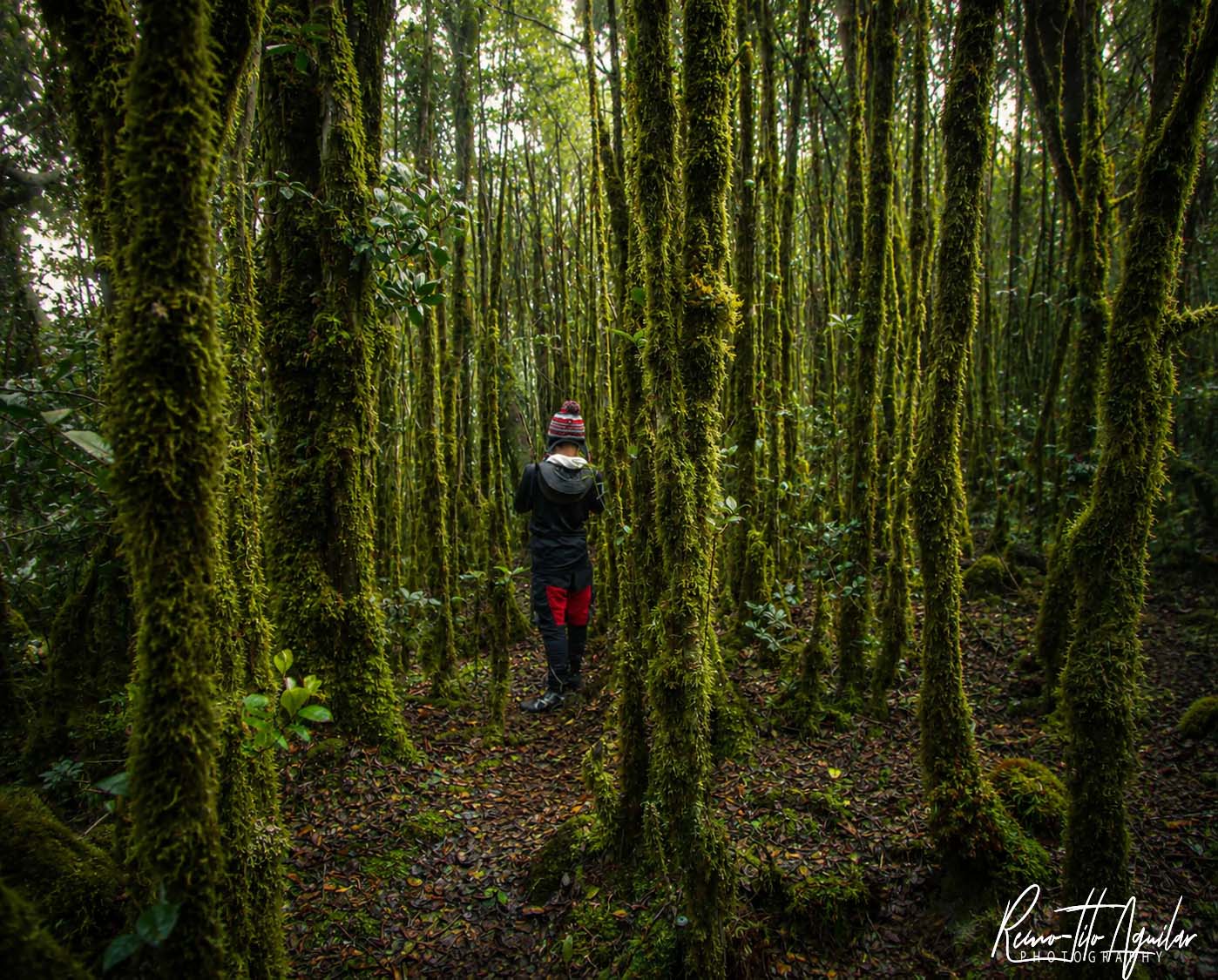
The trees become gnarled and twisted.
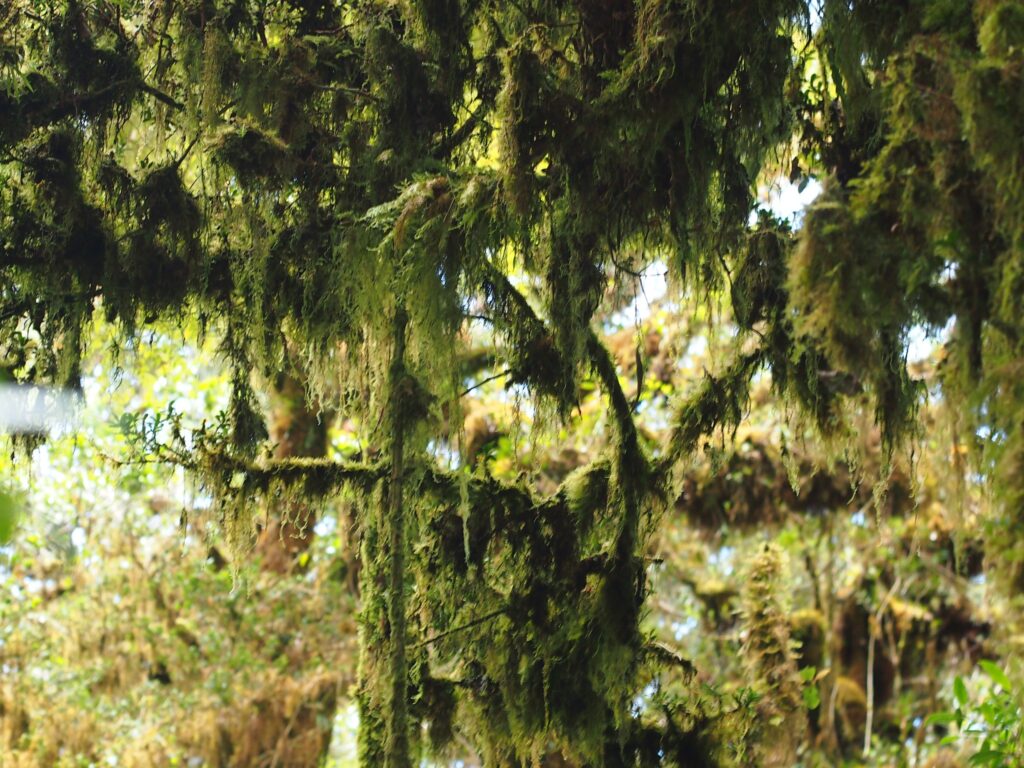
Branches bend under the weight of mosses and epiphytes.
Tree trunks disappear beneath thick green carpets.
Sunlight filters through multiple layers of vegetation.
Everything feels damp.
Everything feels alive.
This is the mossy forest.
Clouds frequently move through these forests, depositing moisture directly onto leaves, bark, mosses, and soil. Unlike lowland forests that depend primarily on rainfall, cloud forests effectively harvest water from the atmosphere itself.
The result is extraordinary productivity.
Plants grow on plants.
Ferns grow on trees.
Orchids grow on branches.
Mosses cover nearly every available surface.
Even fallen logs become gardens.
Walking through Kalatungan’s mossy forest often felt like entering a living greenhouse designed by nature over thousands of years.
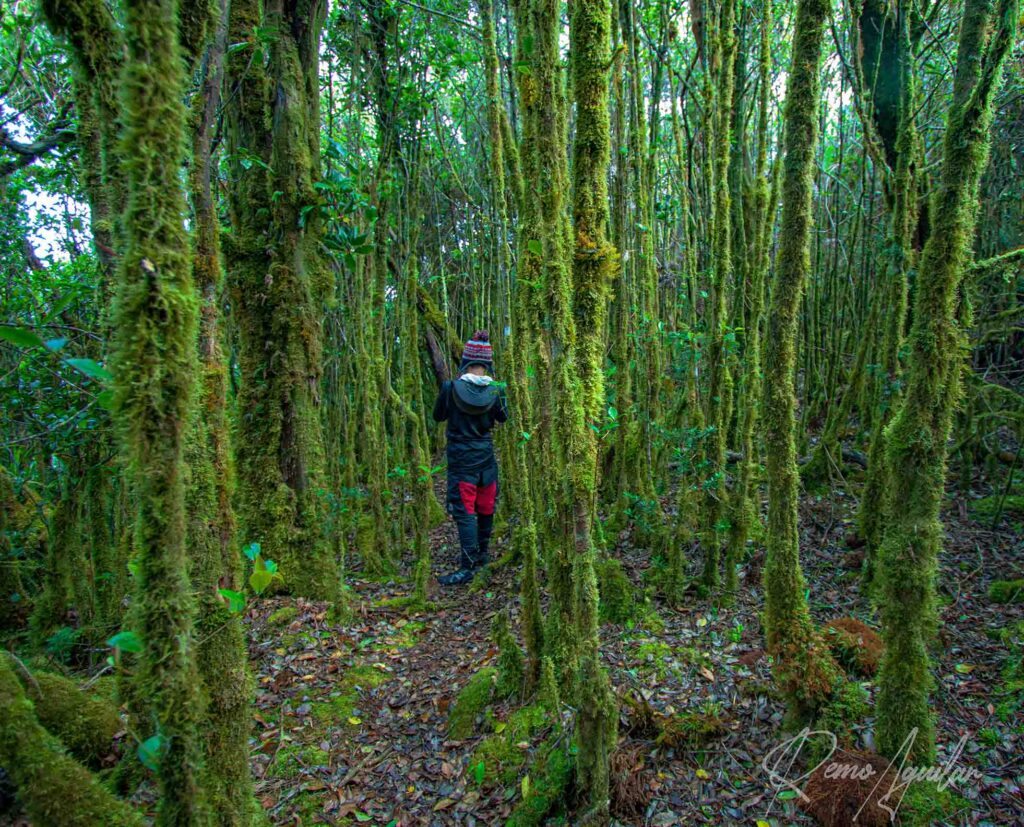
At times the forest became almost surreal.
The trail disappeared among columns of moss-covered trunks. Visibility narrowed. Sound became muffled.
It was easy to understand how hikers could lose their bearings in such terrain.
Yet that same complexity is precisely what makes these forests biologically rich.
Every branch, crevice, and patch of moss creates habitat for something else.
Trees That Become Ecosystems
One of the most striking observations during the climb was how individual trees functioned as entire ecosystems.
In lowland forests, a tree is often perceived simply as a tree.
In cloud forests, a mature tree can support dozens of additional species.
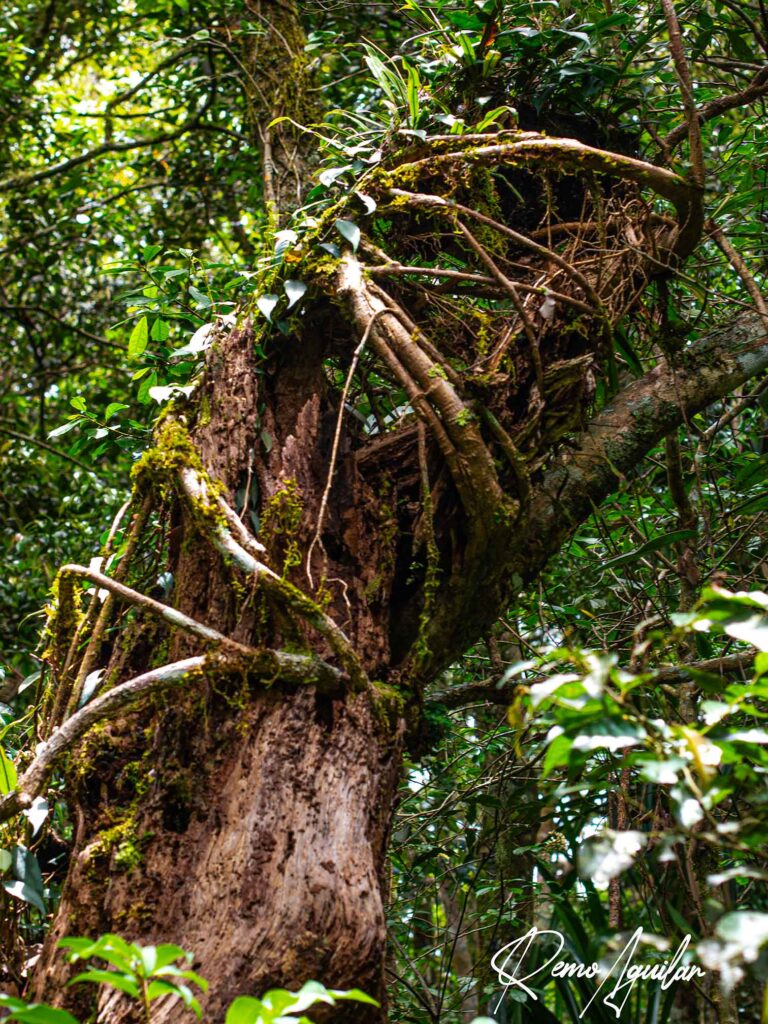
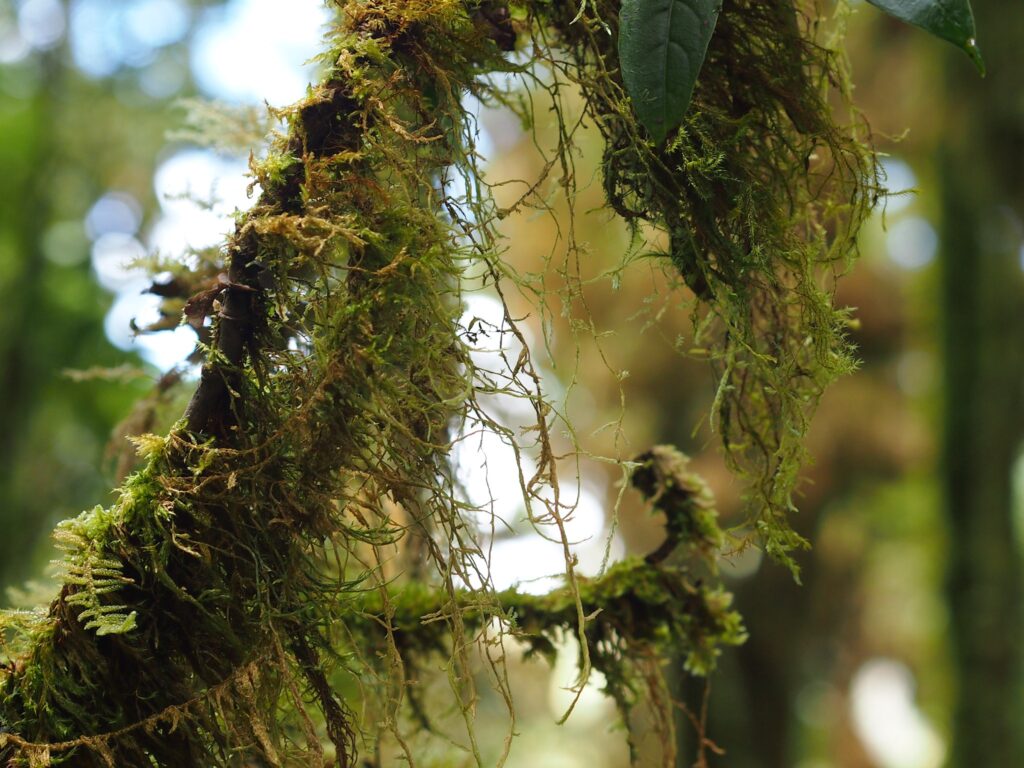
The photograph above shows a decaying tree supporting mosses, ferns, vines, epiphytes, and microorganisms. What appears to be a dying tree is actually supporting new life.
Ecologists sometimes describe forests as systems of continuous recycling.
Nothing is wasted.
A fallen branch becomes substrate.
A dead trunk becomes habitat.
Decay creates opportunity.
What appears to be destruction is often simply transformation.
Cloud forests demonstrate this principle beautifully.
The distinction between living and dead becomes blurred. Even decomposition supports growth.
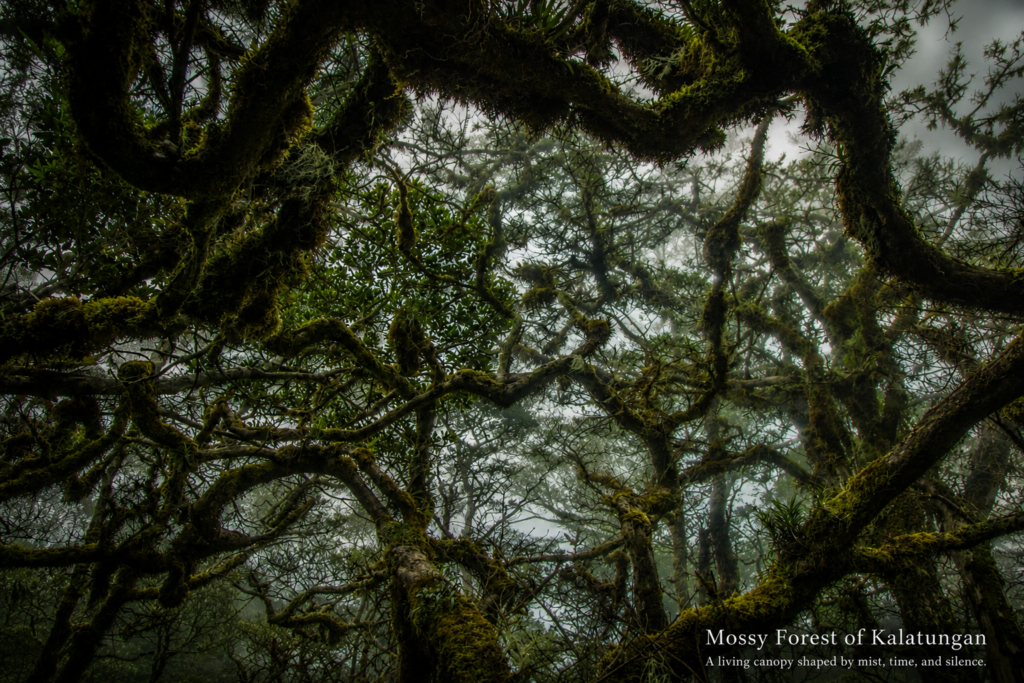
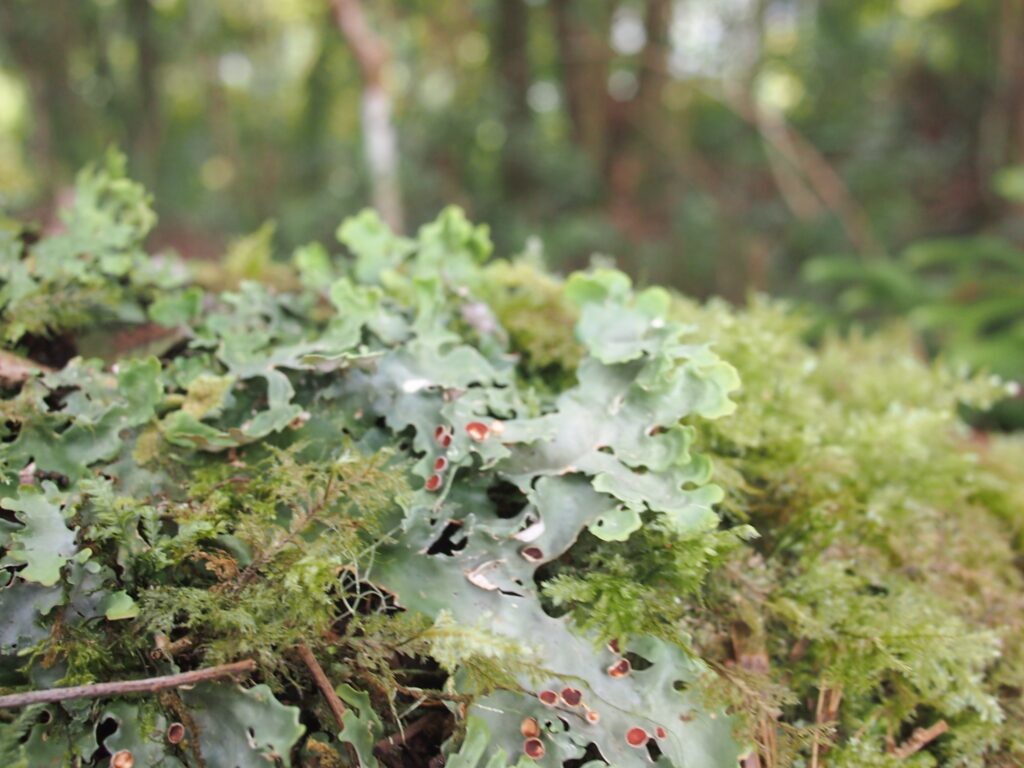
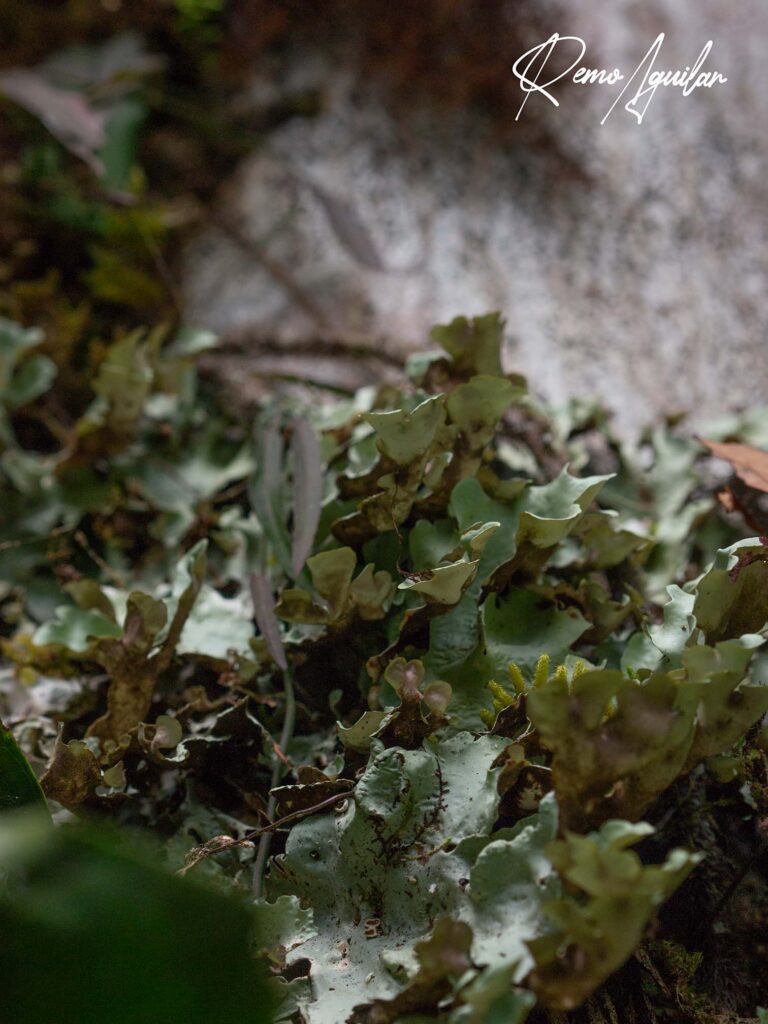
Many branches were thickly coated with mosses and lichens. Epiphytic plants occupied nearly every available surface.
Some trunks carried entire hanging gardens several meters above the ground.
The trees themselves had become landscapes.
For hikers accustomed to more open forests, the abundance of epiphytes can be astonishing.
Yet these organisms perform important ecological functions.
They intercept water.
They retain moisture.
They create microhabitats.
They contribute to nutrient cycling.
They help transform individual trees into vertically layered ecosystems.
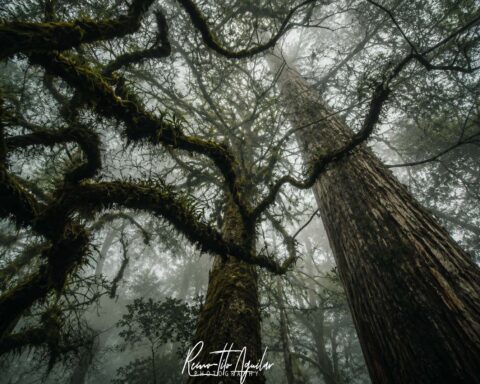
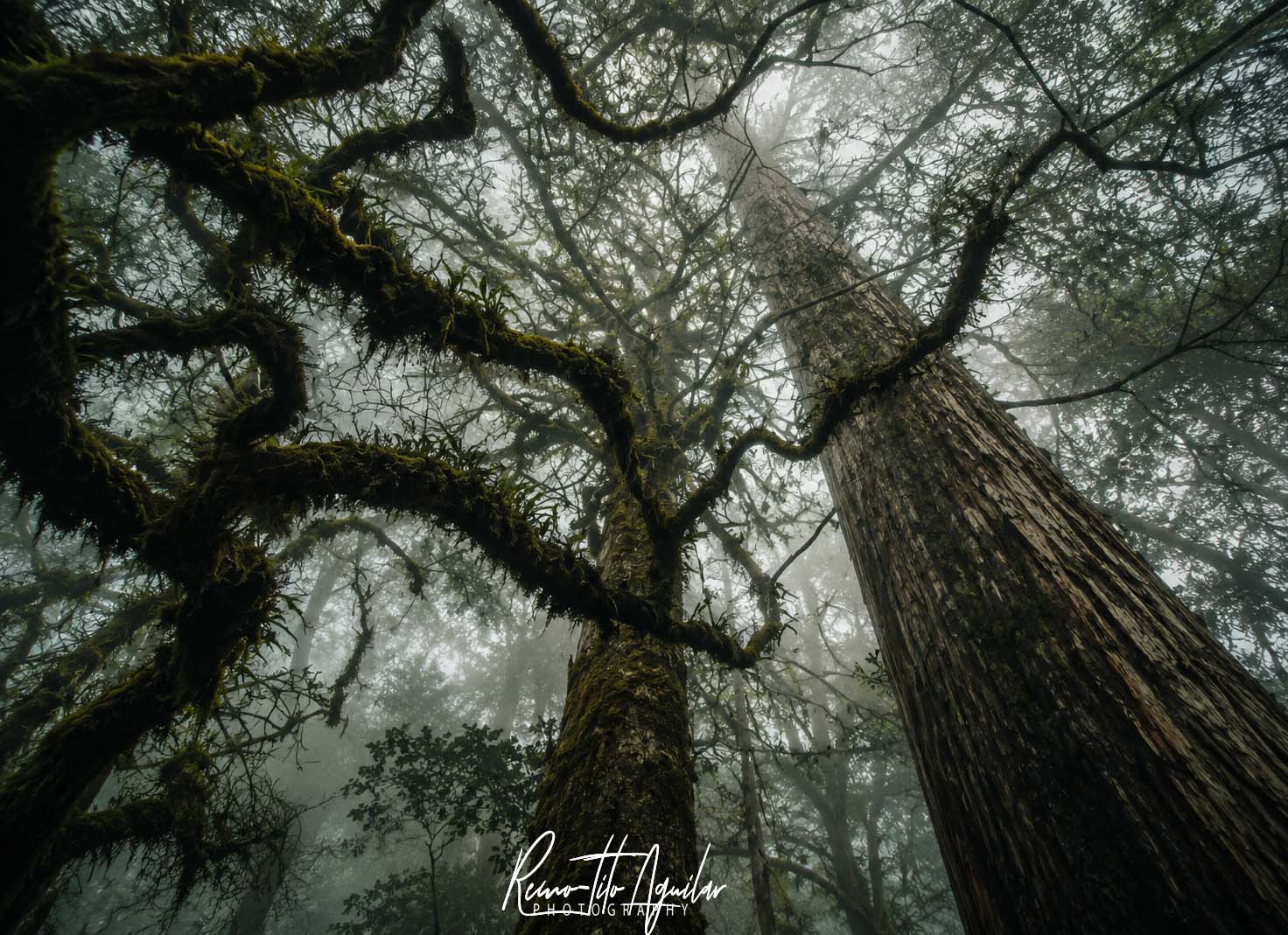
Looking Up
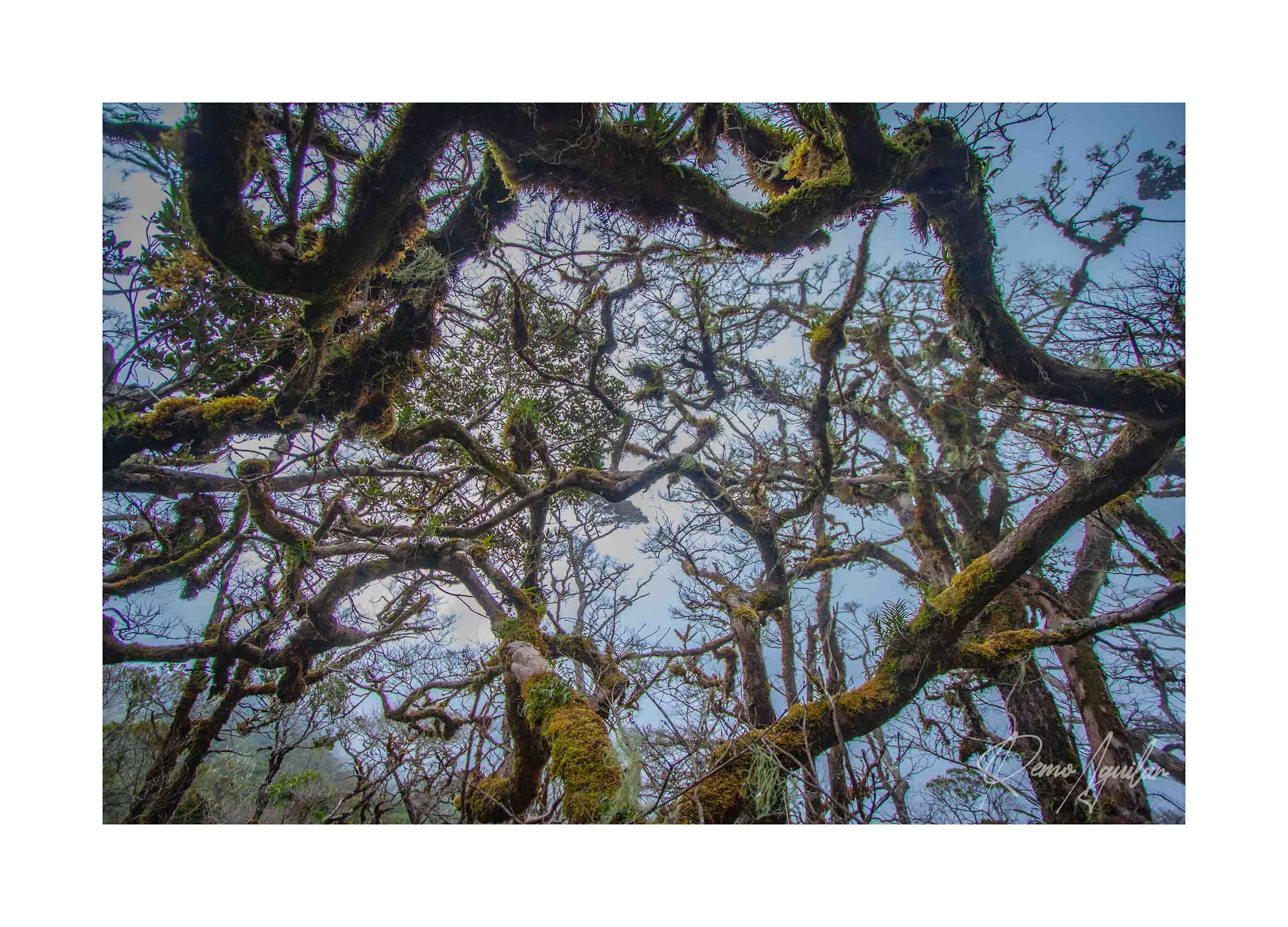
One of my favorite habits while hiking is occasionally stopping and looking upward.
Trails naturally direct attention forward.
Cloud forests reward those who look above.
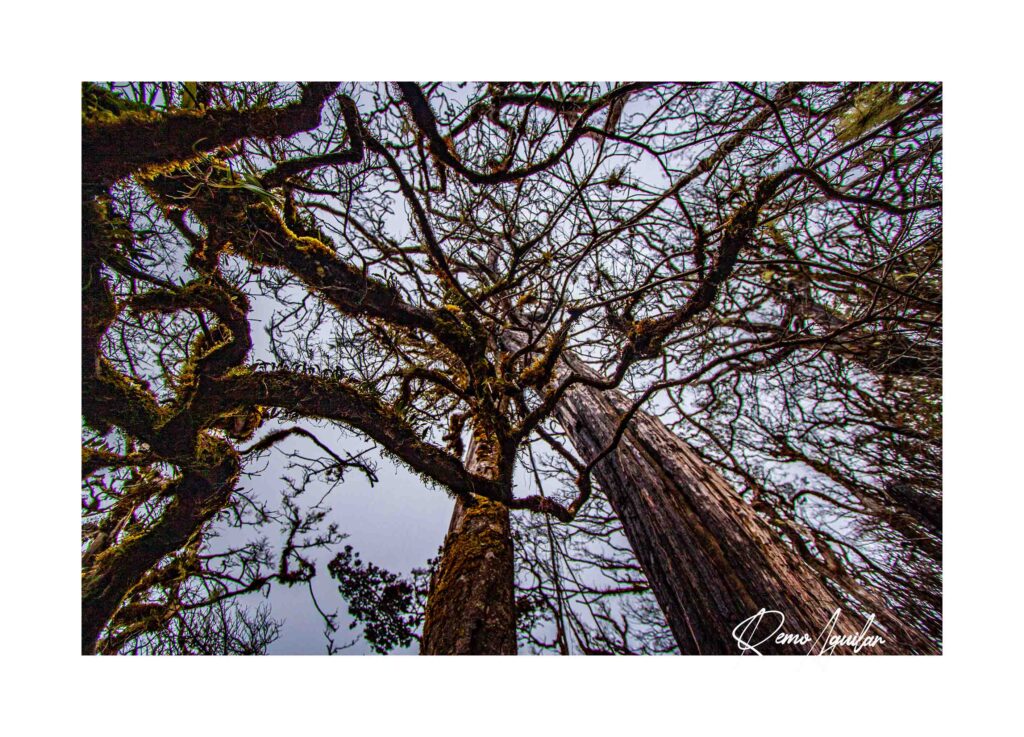
The canopy of Kalatungan often resembled an immense network suspended overhead.
Branches divided into smaller branches.
Smaller branches divided again.
Mosses outlined every contour.
Patterns repeated themselves at different scales.
As someone who spent decades studying anatomy, I could not help noticing familiar forms.
The branching resembled neurons.
Blood vessels.
Bronchial trees.
The architecture of life.
Nature frequently reuses successful structural designs.
Whether in forests, lungs, river systems, or nervous systems, branching networks efficiently distribute resources across complex spaces.
Standing beneath these ancient trees, I was reminded that biology often speaks a common language.
The same patterns appear again and again.
Some forests inspire awe through their size.
Others inspire awe through complexity.
Kalatungan does both.
The canopy seemed less like a collection of trees and more like a living cathedral assembled branch by branch over centuries.
Flowers Along the Trail
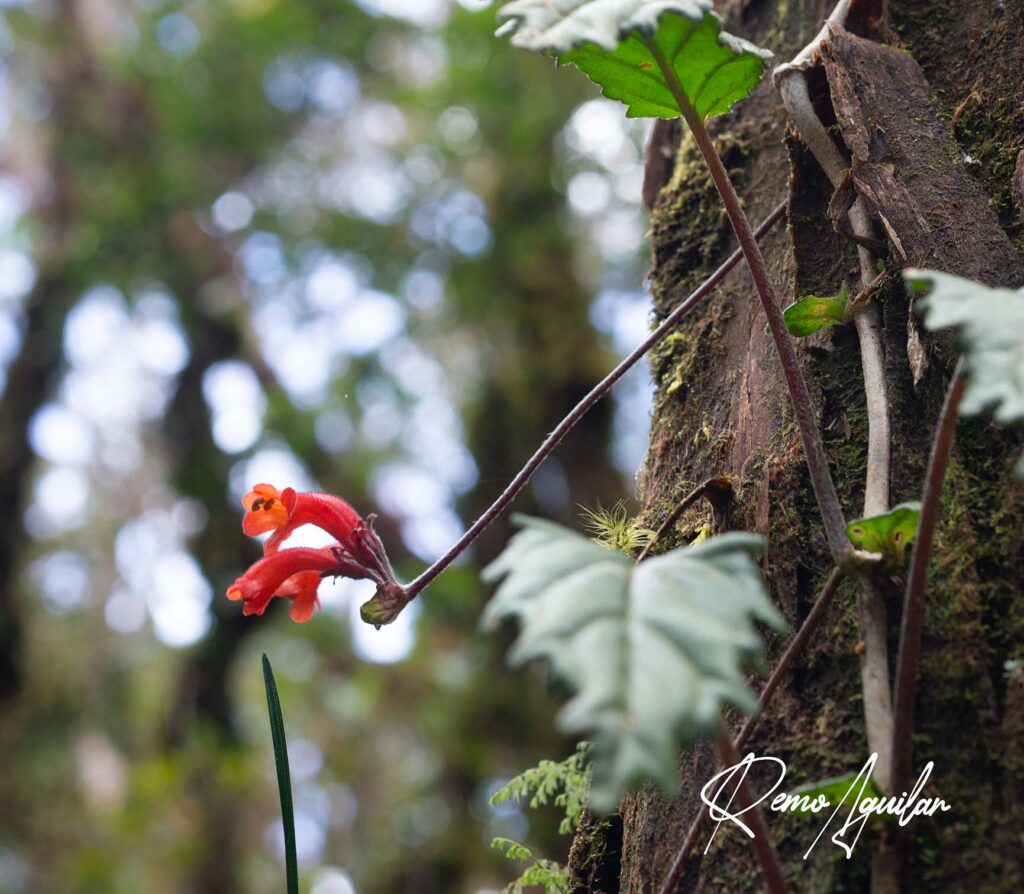
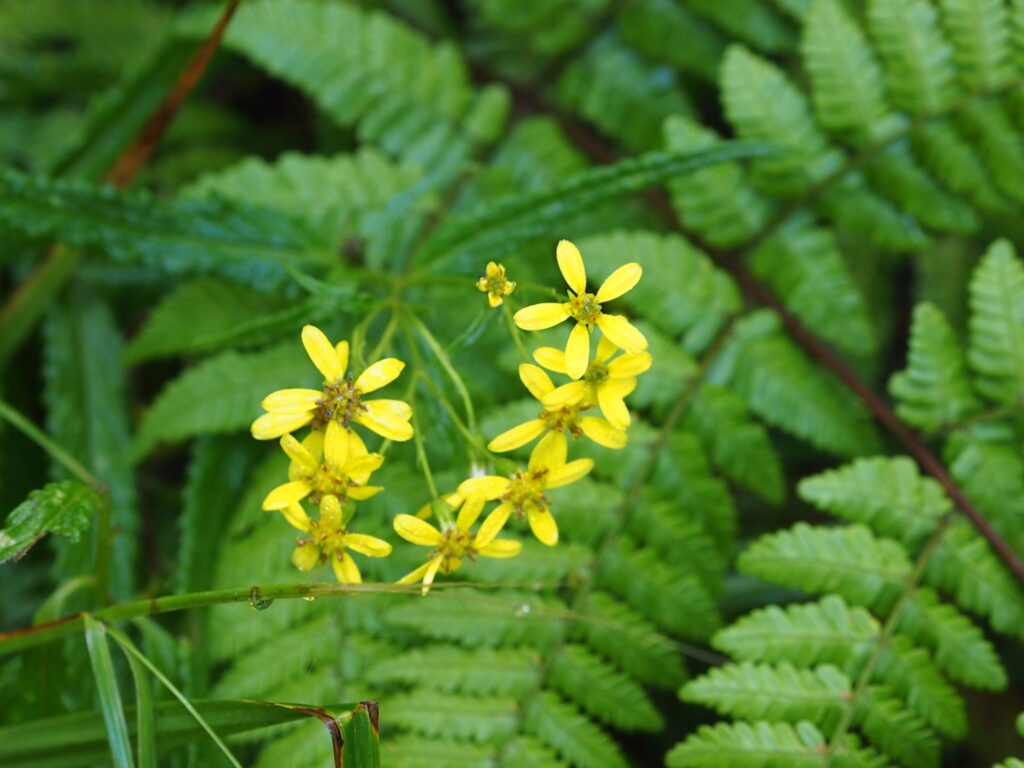
Although the forest itself dominated the experience, smaller botanical discoveries continually rewarded careful observation.
One particularly striking find was this scarlet tubular flower growing against a moss-covered trunk.
Identification remains tentative, but it likely belongs to a group of montane plants adapted for bird pollination.
Its vivid coloration contrasts strongly with the greens and browns of the surrounding forest.
In cloud forests, such colors function as signals.
Pollinators must locate flowers efficiently in environments where visibility is limited and flowering opportunities may be seasonal.
Bright reds, oranges, and yellows help solve that problem.
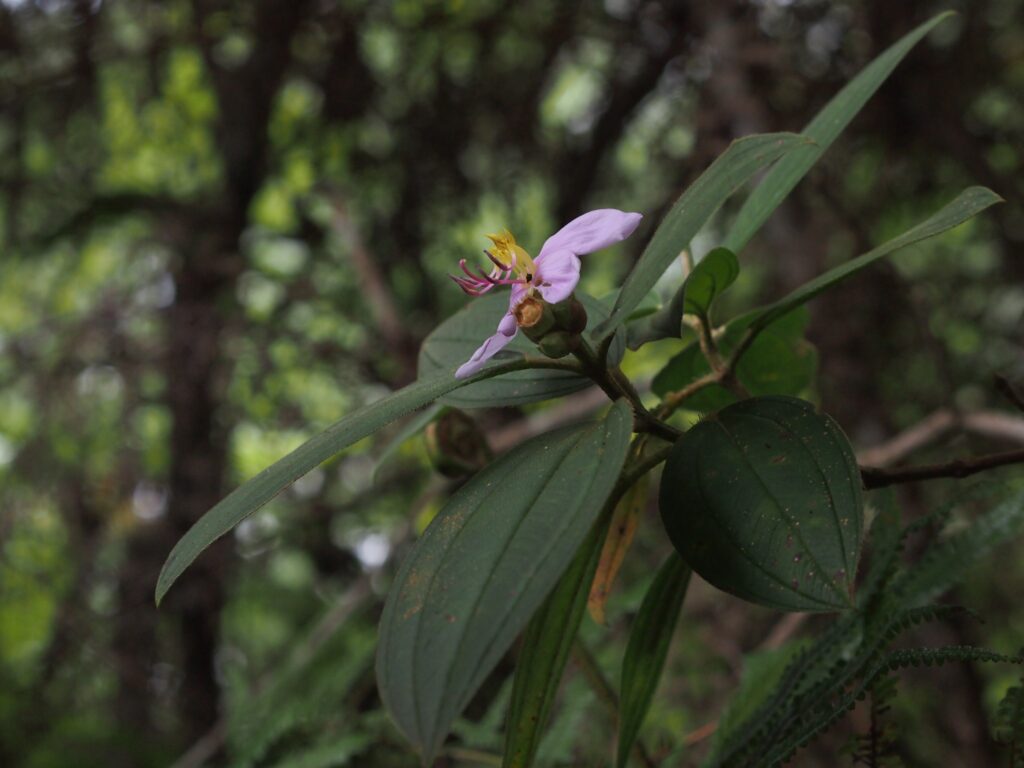
Another memorable plant was a member of the Melastomataceae, a family well represented in Philippine montane forests.
Its delicate pink flower seemed almost fragile against the rugged backdrop of moss-covered branches and dense vegetation.
Yet appearances can be misleading.
Plants thriving in cloud forests are often remarkably resilient, adapted to cool temperatures, strong winds, persistent moisture, and nutrient-poor conditions.
Beauty and toughness frequently coexist in mountain environments.
Fruits and Forest Travelers
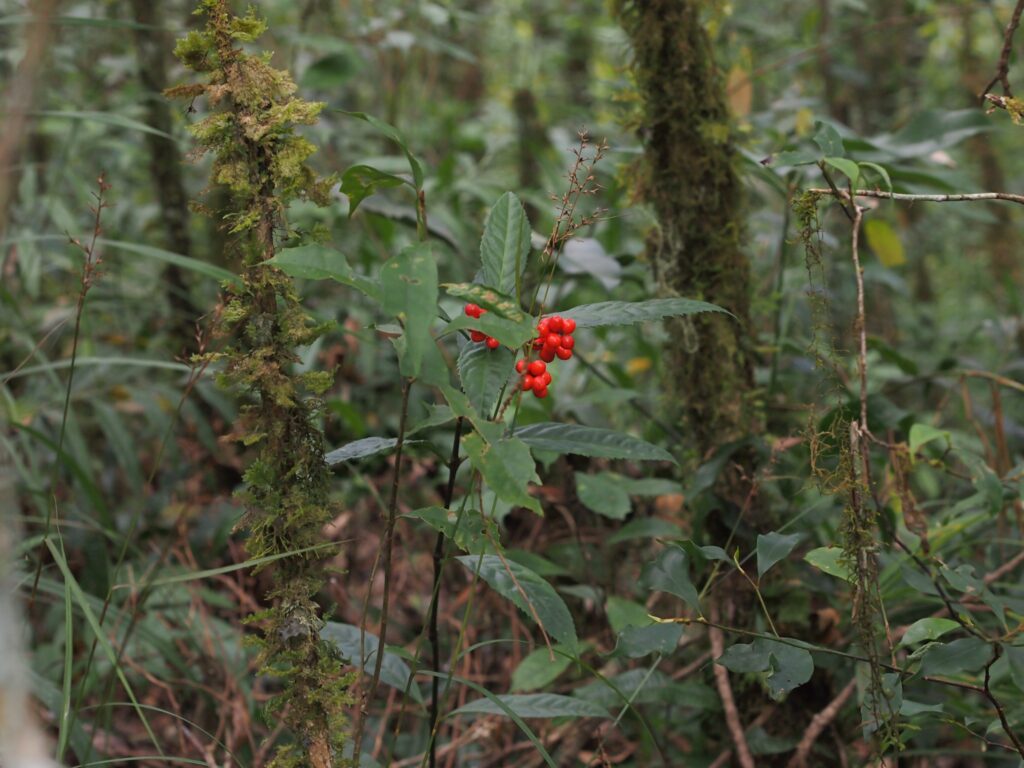
Not every plant attracts attention through flowers.
Many do so through fruit.
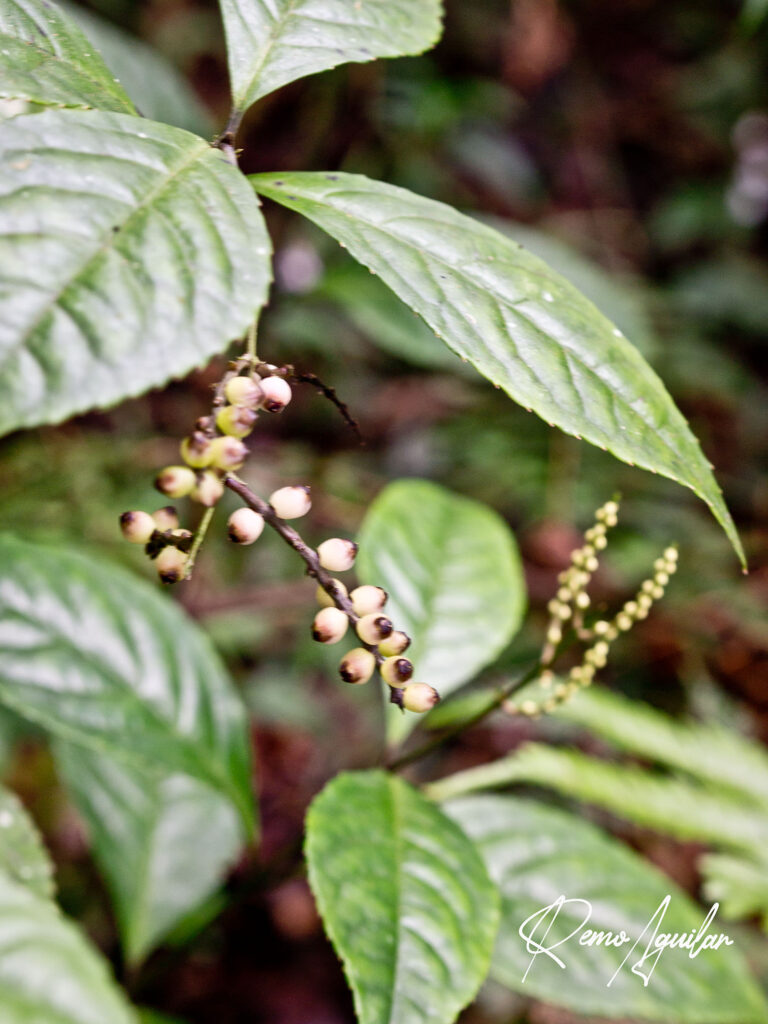
Brightly colored berries appeared periodically along the trail, their colors standing out against the muted tones of the forest floor.
Such fruits represent partnerships between plants and animals.
Birds consume the fruits and disperse the seeds.
The plants gain mobility.
The animals gain food.
Both benefit.
This simple relationship helps shape entire forests.
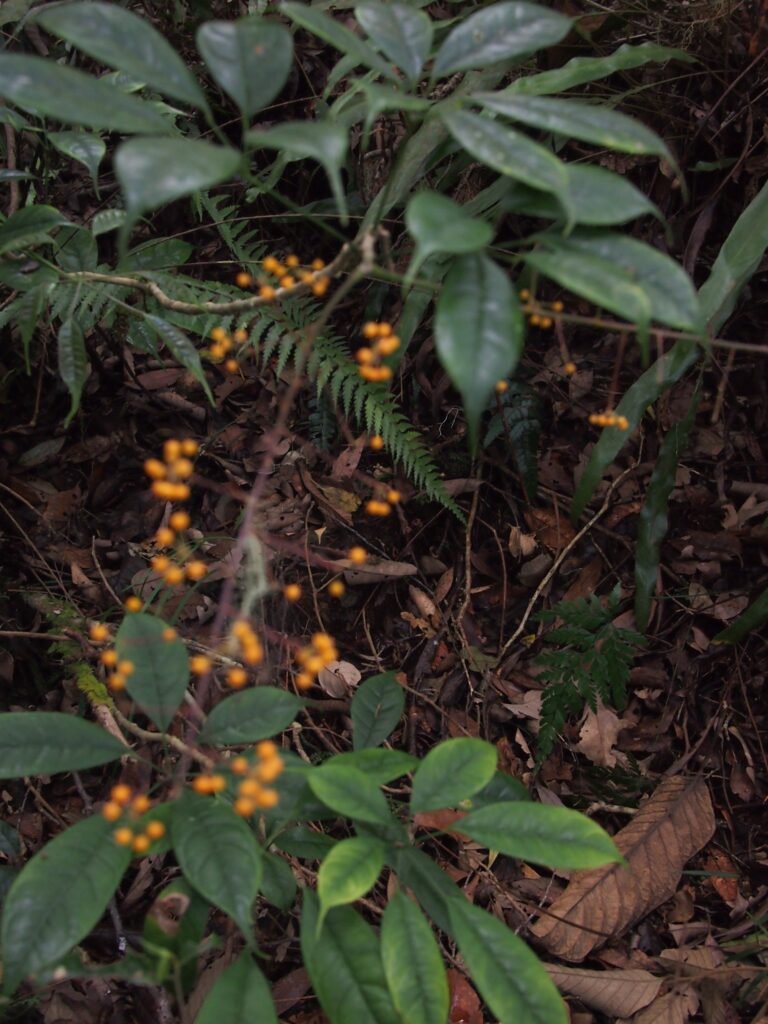
The orange berries photographed during the climb likely serve similar ecological roles.
While species-level identification remains uncertain, their significance is clear.
They are part of a network of interactions connecting plants, birds, insects, and mammals.
Every fruit carries a story.
Every seed carries potential.
Every berry represents the next generation of forest.
The Recyclers
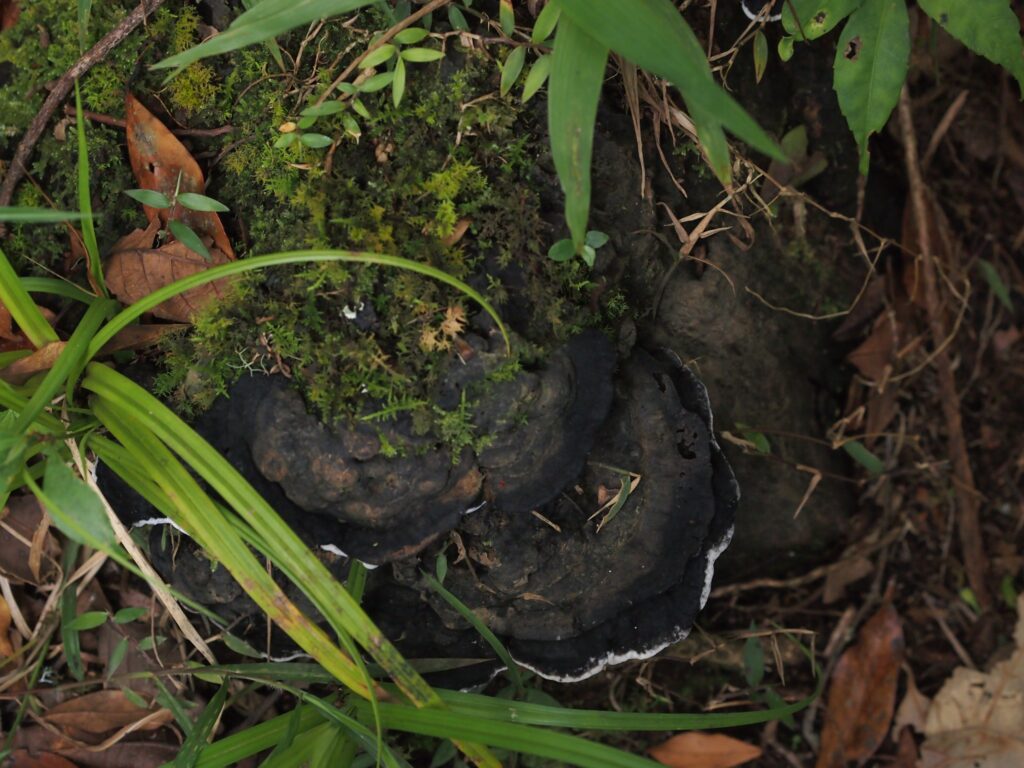
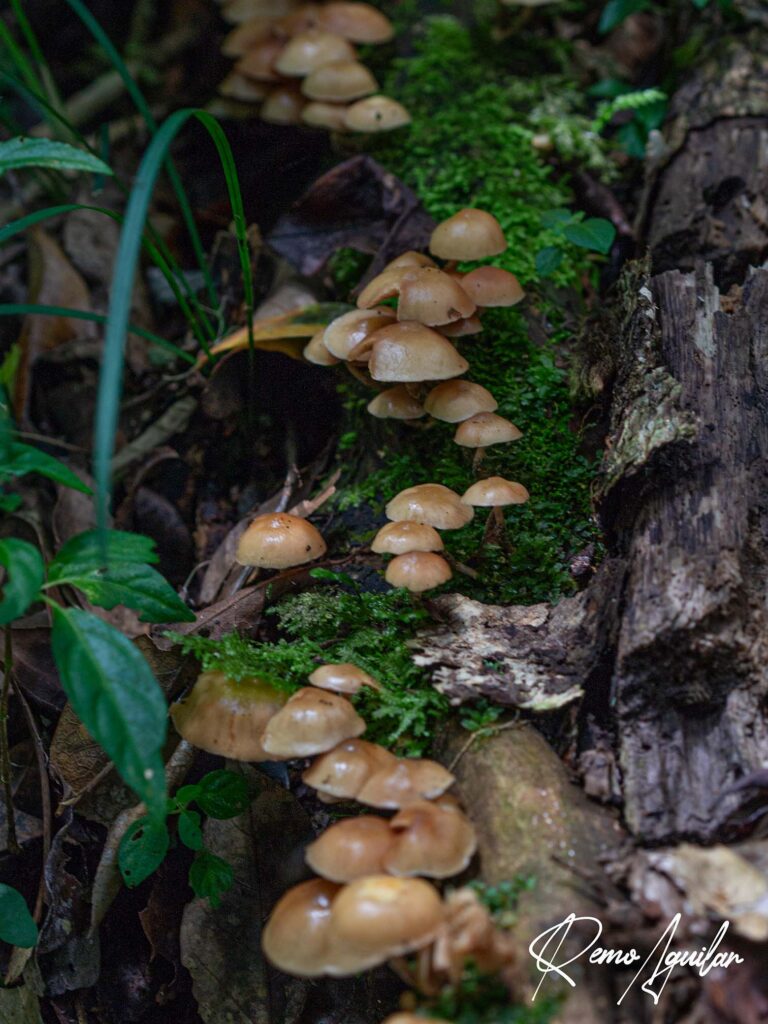
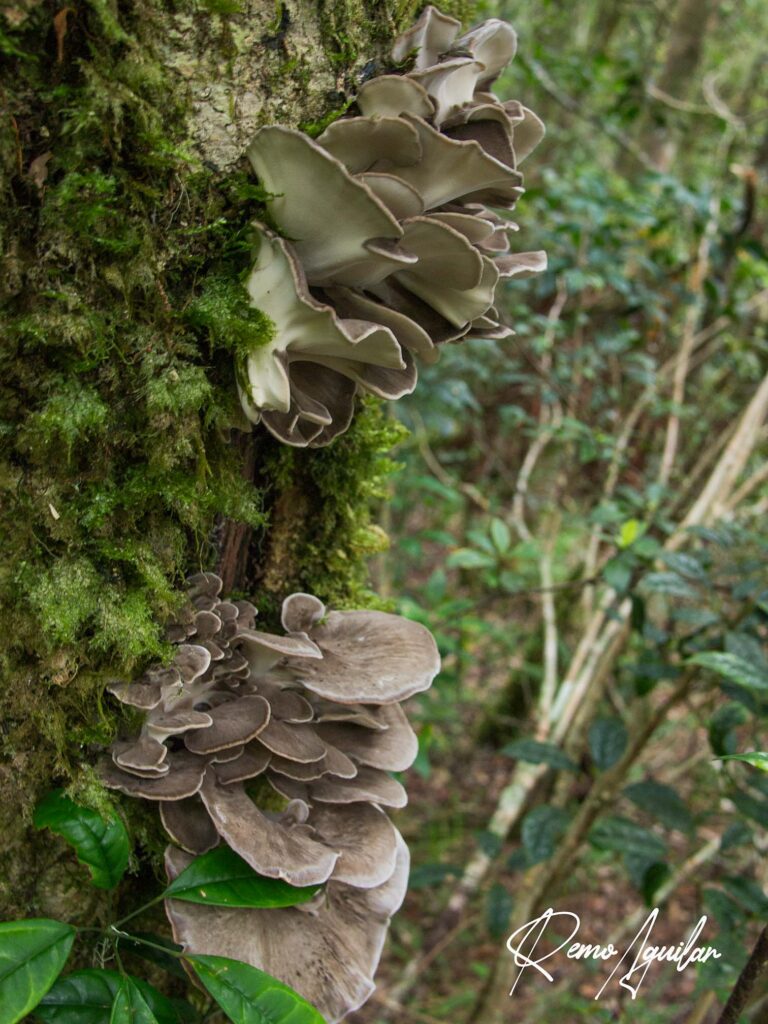
If plants are the architects of forests, fungi are the recyclers.
Without fungi, forests would drown in their own debris.
Leaves, branches, trunks, and fallen trees would accumulate endlessly.
Instead, fungi break down complex organic materials and return nutrients to the ecosystem.
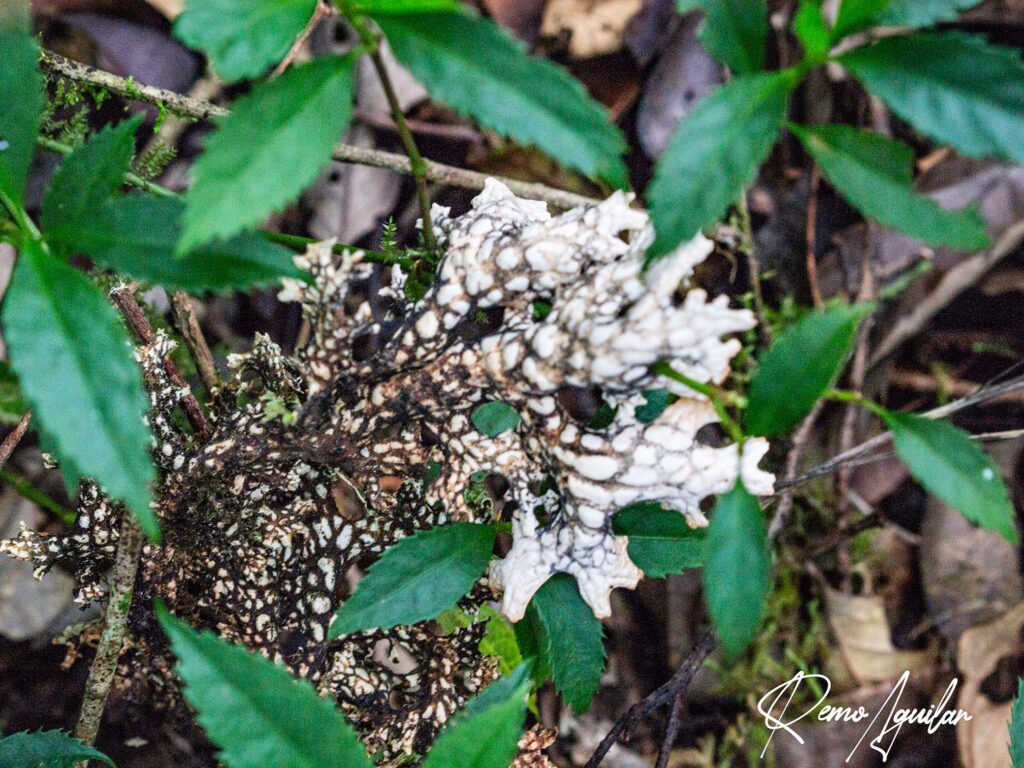
The bracket fungus we encountered growing from decaying wood was a visible reminder of this process.
Its work occurs quietly.
Yet entire forests depend upon it.
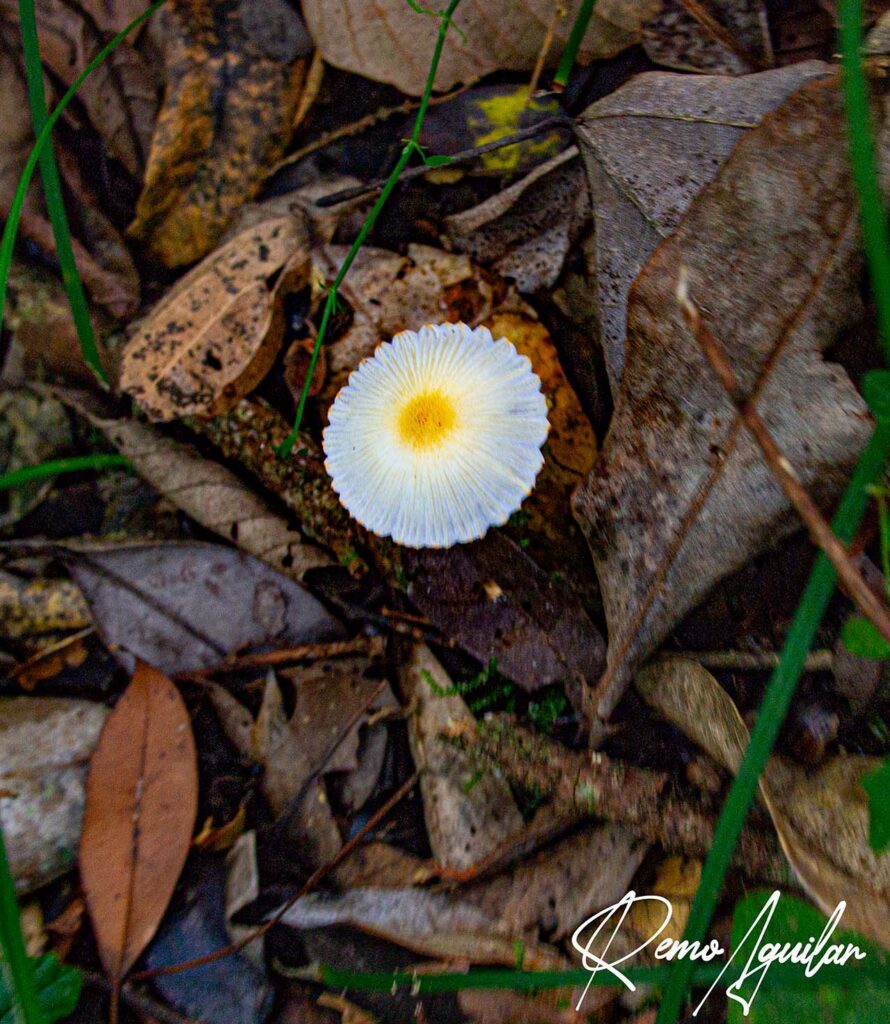
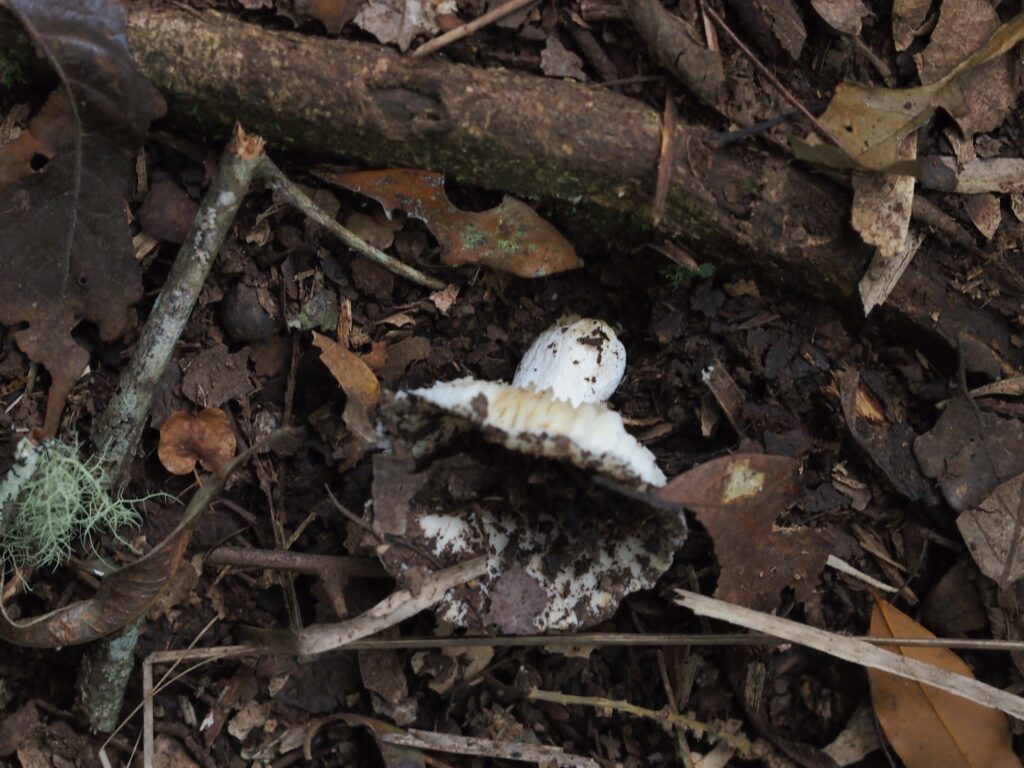
The small white mushroom emerging from leaf litter may have existed for only a brief period before disappearing.
Many fungi spend most of their lives hidden beneath the surface.
What we see is merely the fruiting body—the reproductive structure.
The organism itself may extend through soil, wood, or organic matter far beyond what is visible.
These fleeting appearances remind us how much forest life remains hidden.
Living in the Cold
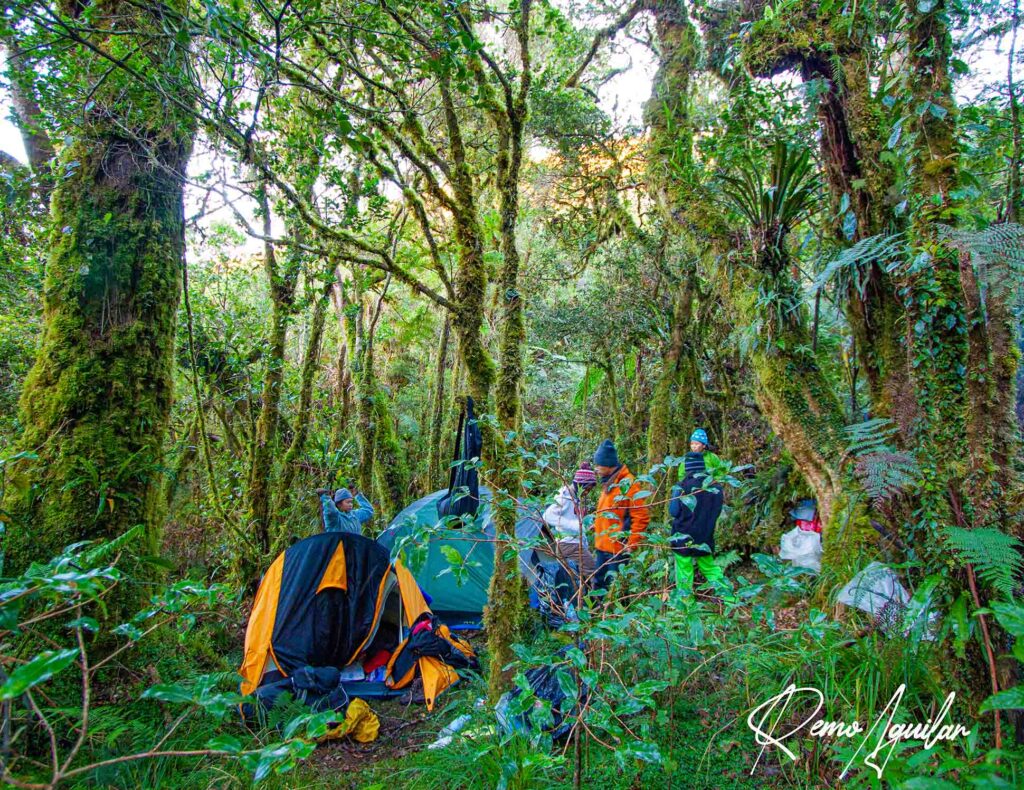
Cloud forests are beautiful places to visit.
They can also be uncomfortable places to camp.
Temperatures drop significantly at elevation.
Moisture penetrates clothing and equipment.
Everything seems perpetually damp.
Mornings arrive cold and foggy.
Yet these conditions are precisely what sustain the ecosystem.
The discomfort experienced by hikers creates opportunity for mosses, lichens, orchids, and countless other organisms adapted to such environments.
For a few days, we became temporary residents of their world.
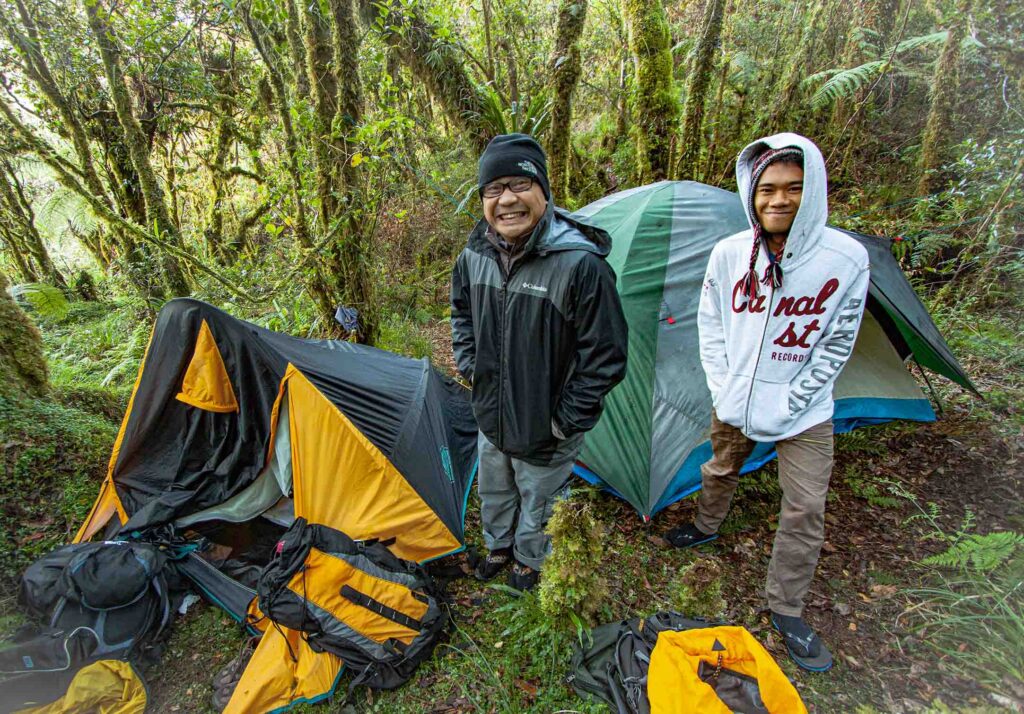
Life in camp moved at a different pace.
Meals tasted better.
Conversations felt simpler.
The surrounding forest provided a constant reminder that we were visitors.
The mountain did not exist for us.
We merely passed through.
Lessons from a Cloud Forest
Modern hiking culture often emphasizes goals.
Reach the summit.
Complete the traverse.
Log the elevation.
Collect the achievement.
There is nothing wrong with these motivations.
But Kalatungan taught me something different.
The summit was only one point on the mountain.
The forest was the mountain.
The mosses, fungi, orchids, lichens, insects, birds, and trees formed a living community that existed long before hikers arrived and will hopefully persist long after we leave.
Natural history encourages a different pace of observation.
It asks us to notice details.
To ask questions.
To remain curious.
To appreciate not only landscapes but also the countless organisms that create them.
For a former biology student who eventually became a surgeon, Kalatungan served as a reminder that learning never really ends.
The classroom simply changes.
Sometimes it becomes a moss-covered forest at two thousand meters above sea level.
Sometimes it becomes a flower beside a trail.
Sometimes it becomes a fungus emerging from a fallen log.
Years later, I remember surprisingly little about the summit itself.
What remains vivid are the moss-covered trunks, the lichens, the orchids, the fungi, and the feeling of walking through a forest that seemed older than memory.
Kalatungan taught me that mountains are not defined only by their highest points.
Sometimes their greatest treasures are the small lives quietly thriving beneath the canopy.
Some other “small wonders” I found interesting in Mt. Kalatungan…