“Sometimes, it feels good to get lost in an adventure—or forget about time and schedules.”
I don’t remember much about the itinerary anymore.
There were permits to secure, vehicles to coordinate, schedules to follow, and campsites marked on maps. Before every climb, I tend to build the trip in my head long before my boots touch the trail. I imagine where we will stop, how long each section will take, when the light will be best, and how the days should unfold.
Mt. Kalatungan had little interest in those plans.
We arrived in Pangantucan carrying the usual mixture of excitement and uncertainty that accompanies any mountain journey. The people who welcomed us spoke of ridges, water sources, camps, and summits. Their knowledge made the mountain sound orderly, almost predictable.
But mountains are never truly predictable.
That evening, our group gathered at the town park. Stories flowed more easily than the cool mountain air. Gear was checked and rechecked. The conversation drifted from photography to past climbs and future adventures. Beyond the circle of light, Kalatungan waited in the darkness.
By morning, the first adjustments had already arrived.
One companion had to leave because of a family emergency. Guides changed. Plans shifted. We started later than intended.
At the time, I viewed those delays as small frustrations.
Looking back, they were simply the mountain teaching its first lesson.
The trail began gently enough, passing through farms, streams, and small settlements. Children watched us pass with quiet curiosity. Somewhere along the trail, I found myself embarrassed when a young child asked for food and I had nothing to offer.
The encounter lasted only seconds.
Yet it stayed with me longer than many photographs from the trip.
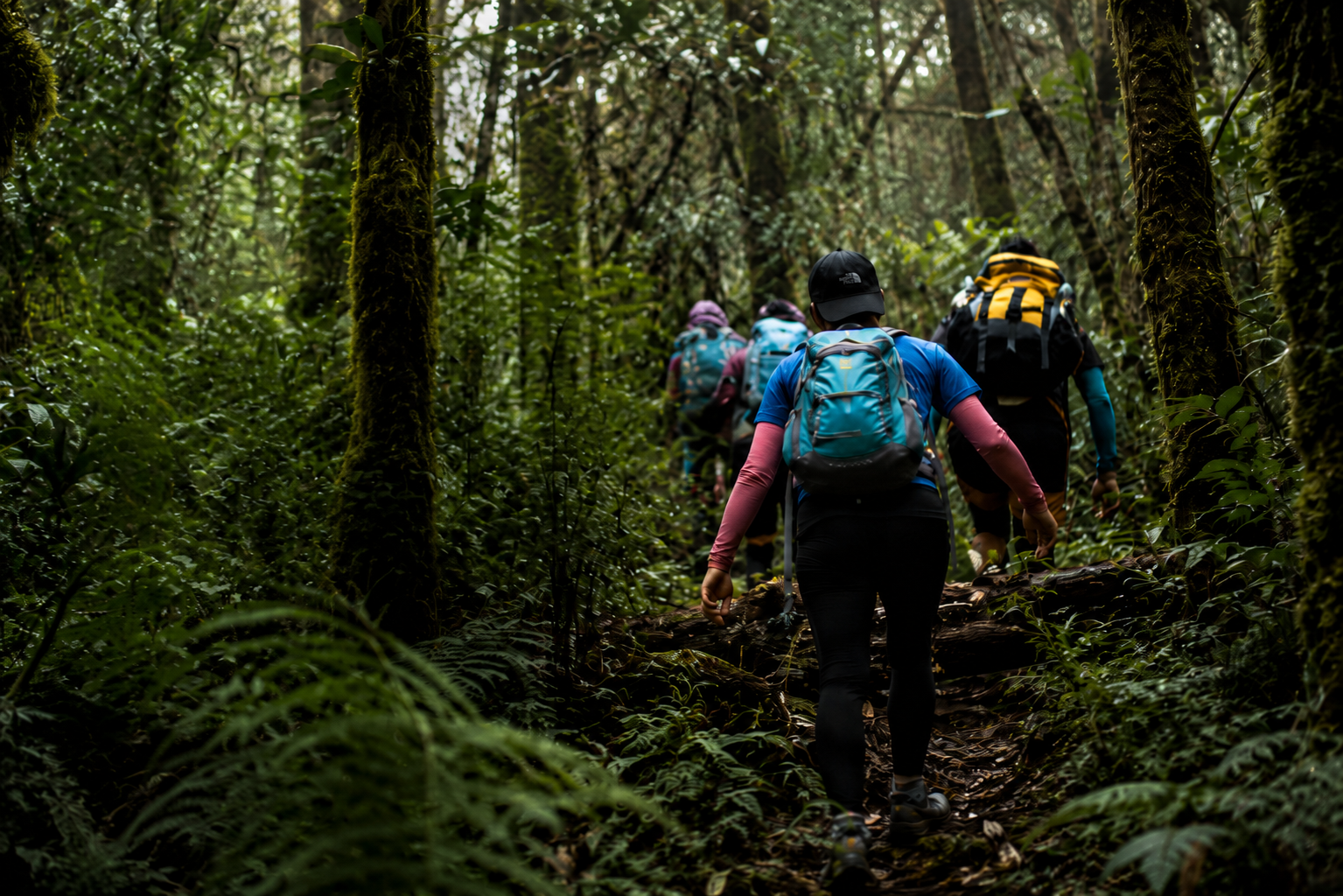
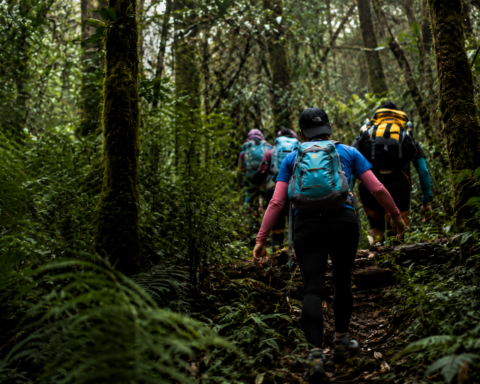
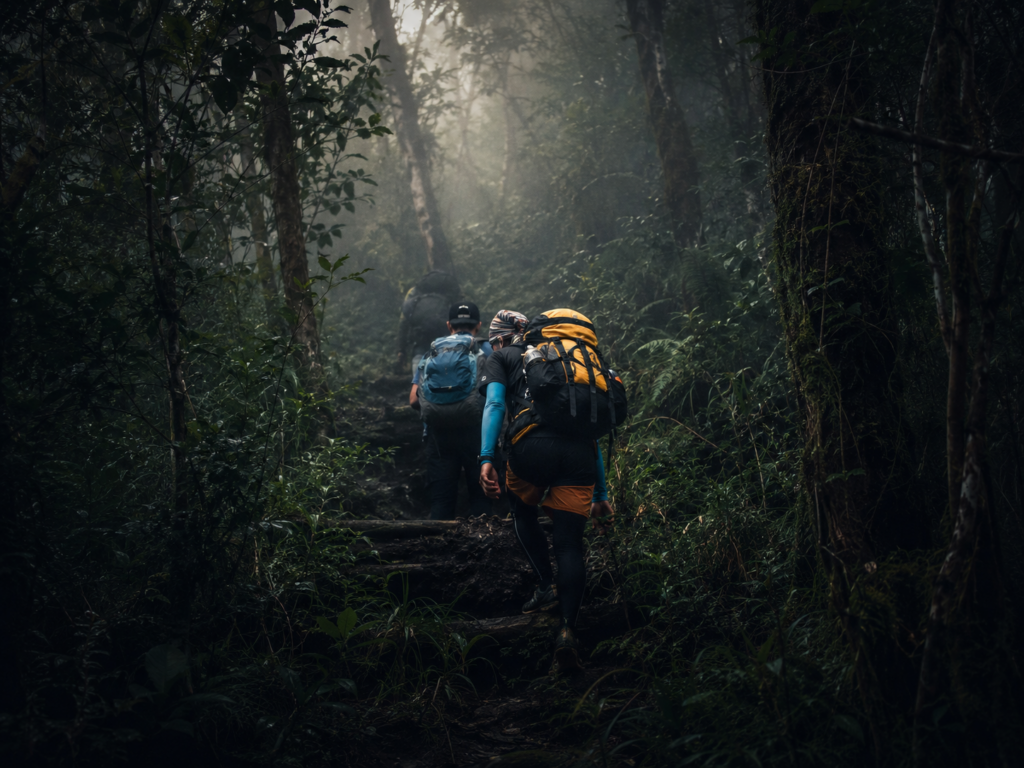
Beyond the last settlement, the forest closed around us.
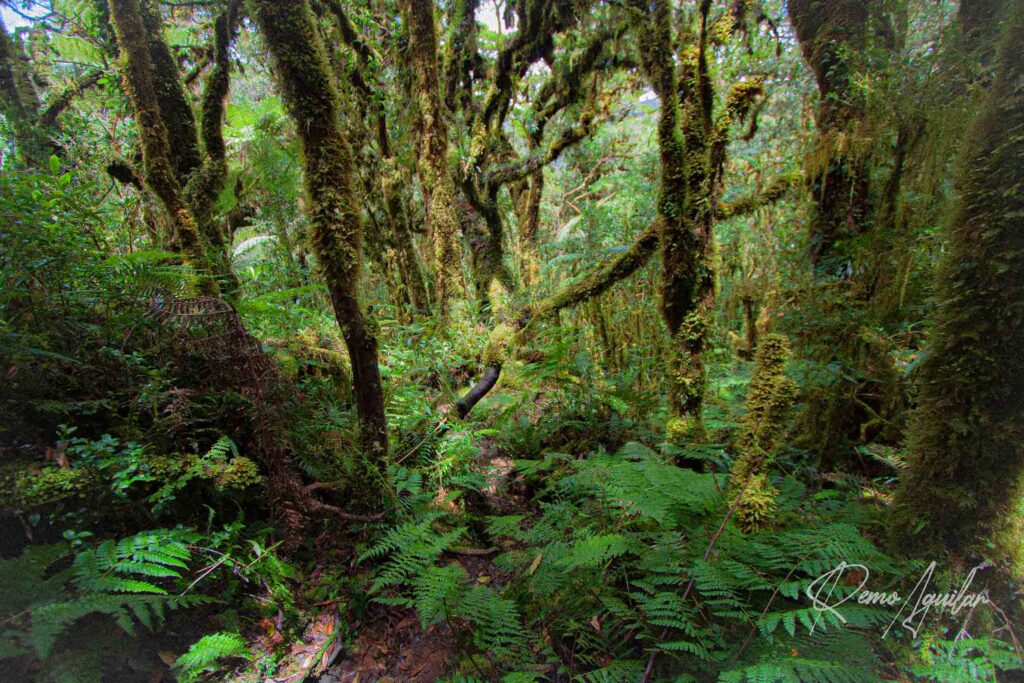
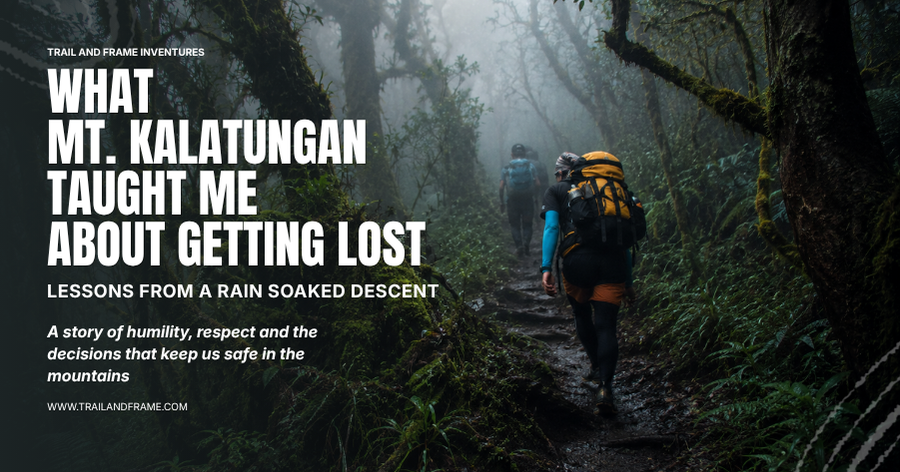
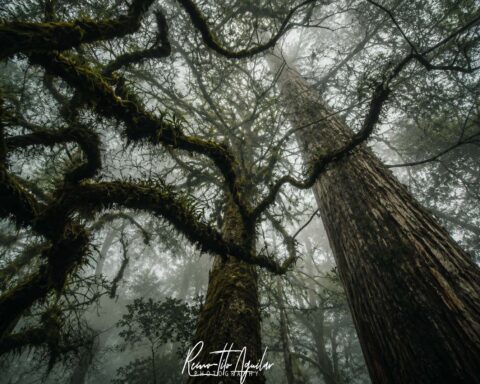
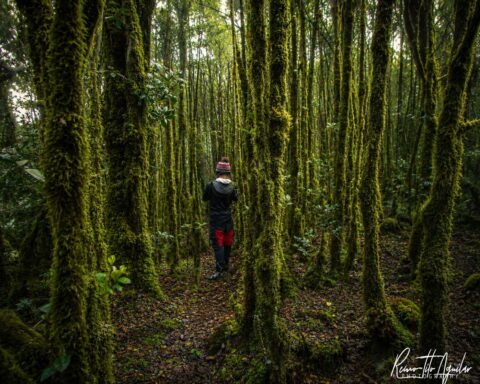
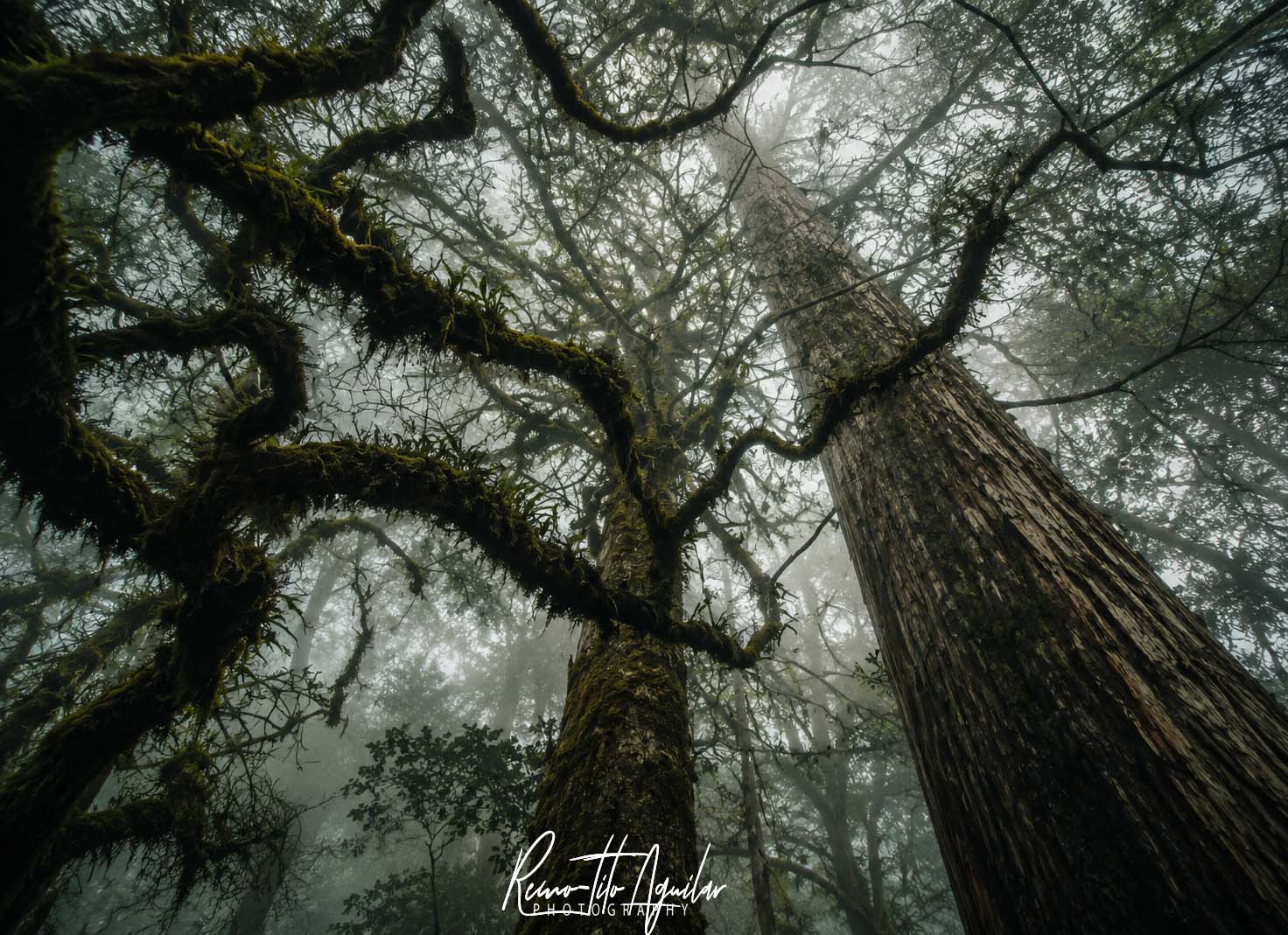
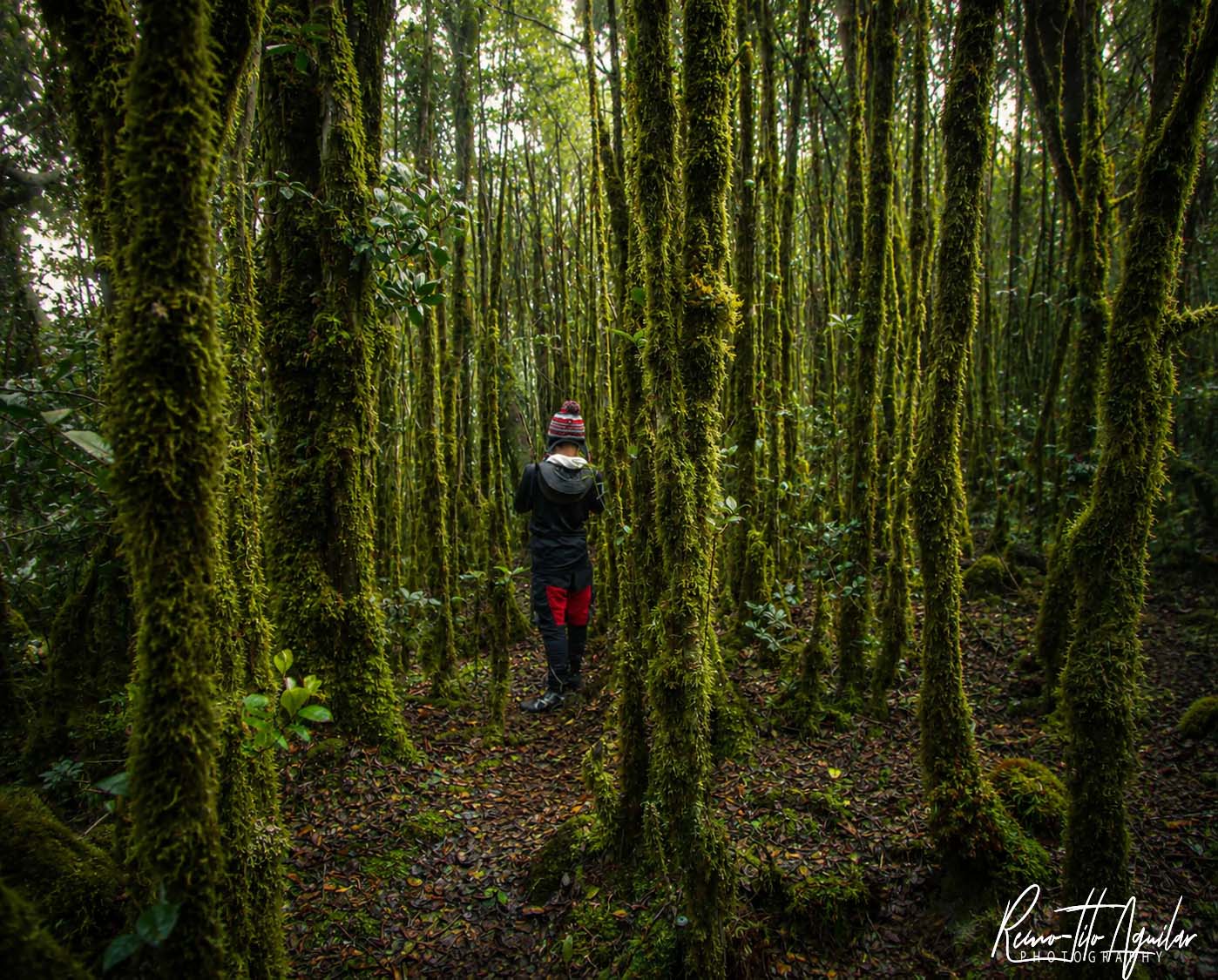
The transition felt immediate. The sounds of people faded behind us and were replaced by dripping leaves, distant birds, and the soft rhythm of boots against earth. Moss draped branches overhead. Strange fungi emerged from decaying logs. Every few minutes I stopped to photograph something that caught my attention.
A leaf.
An insect.
A shaft of light.
The others laughed at how slowly I moved.
But that was the point of a photo climb.
The mountain was not merely a destination. It was the subject.
As the hours passed, time became difficult to measure. The forest seemed suspended between movement and stillness. Walking became repetitive enough to quiet the mind, yet every turn offered something new to notice.
Then we emerged onto Muleta Ridge.
The forest vanished.
The world opened.
The ridge stretched ahead like the spine of some ancient creature, narrow and exposed between sky and valley. Wind swept across the grasslands. Clouds drifted below us. In the distance, waterfalls carved white lines into the landscape.
For many climbers, it would have been exhilarating.
For someone uncomfortable with heights, it was less inspiring and more humbling.
I remember laughing at myself.
What kind of photographer spends his free time climbing mountains only to become uneasy whenever the trail approaches an edge?
Before long, the weather changed.
Fog rolled across the ridge. The horizon disappeared. Wind became rain. The camera that I had carried so carefully disappeared beneath layers of improvised protection. The photography I had imagined gave way to the simple task of staying warm and moving forward.
The mountain was steadily stripping away expectations.
By late afternoon, we reached a small hunter’s shelter.
Wet clothing steamed beside cooking pots. Dinner tasted better than it deserved to. The original plan had been to camp higher, closer to the summit. Instead, we stopped where conditions allowed.
Years later, I remember very little about the meal itself.
I remember the feeling of acceptance.
The realization that there was no value in arguing with circumstances.
The mountain would decide what was possible.
The following morning rewarded that surrender.
The skies cleared.
The sunrise I had imagined never materialized. Our campsite sat tucked between peaks where the sun remained hidden. For a few moments I felt disappointed, as photographers often do when reality refuses to cooperate with imagination.
Then we continued climbing.
Forty-five minutes later, we stepped onto Kalatungan’s summit beneath clear skies.
The view stretched in every direction. Ridges folded into valleys. Forests rolled toward distant horizons. Peaks emerged from clouds like islands rising from a sea.
What remains with me now is not the grandeur of the view itself.
It is the contrast.
The summit felt beautiful not because it was perfect, but because so much of the journey had unfolded differently than planned.
The delayed start.
The changing weather.
The missed photographs.
The abandoned schedules.
The countless small adjustments required along the way.
Standing there, I realized that the mountain had given me something more valuable than the images I had hoped to capture.
It had reminded me that some experiences become meaningful only after we stop trying to control them.
For all the preparation that adventure demands, its most memorable moments often begin where our plans end.
And somewhere between the missed sunrise and the summit view, I learned that falling behind is not always the same as being lost.