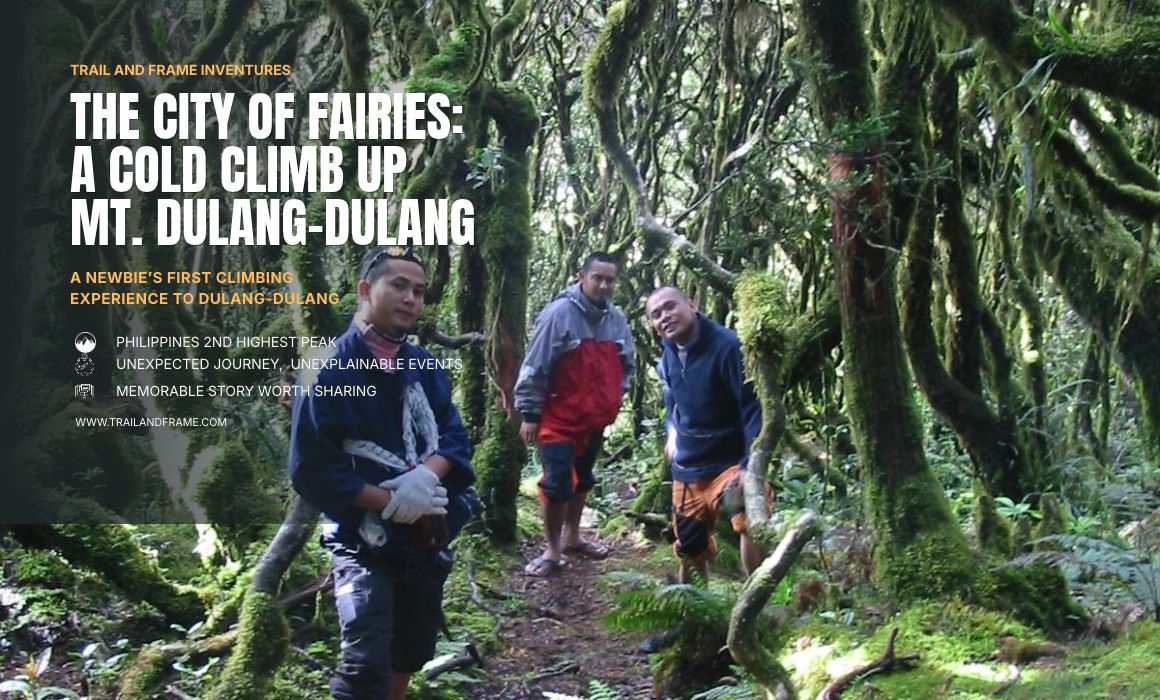
I thought I had had enough of cold peaks and chilling climbing episodes. But here I was again, shivering, bones and muscles, on top of the mythical Mt. Dulang-Dulang (D2) last weekend. The experience gave new meaning to the chilly expression “brain freeze.”
Mount Dulang-Dulang is the highest peak in the Kitanglad Mountain Range, located in the north-central portion of Bukidnon. At 2,941 metres (9,649 ft) above sea level, it is the second-highest mountain in the Philippines, next to Mount Apo in Davao, at 2,956 metres (9,698 ft).
Our original plan was a three-day traverse from Mt. Dulang-Dulang to Mt. Kitanglad. But PAMB advised us that the connecting trail had been destroyed by a recent landslide caused by heavy rainfall and remained inaccessible. Still, Team DaClabudigurong pushed through with the D2-only climb. We were already prepared and hyped for it.
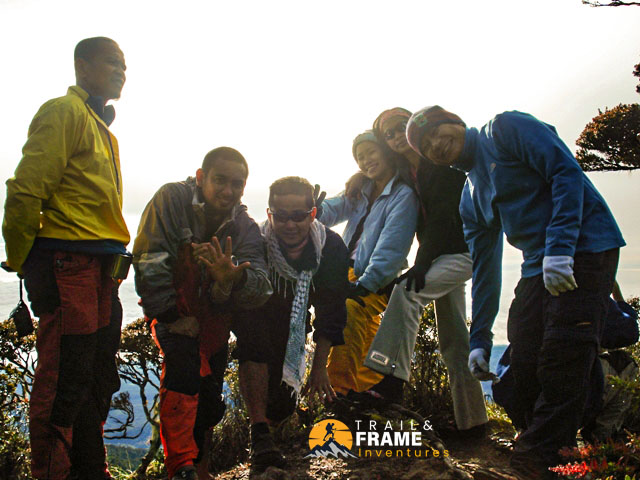
There were four of us from Tacurong: Chris, Ian, Jaypee, and me. It was raining when we arrived in Malaybalay City, so while we waited for the others, our hosts, Joan and Merlin, treated us to hot native coffee and Lechon Kawali at Mindy’s. The climbing team soon grew to nine. Our good friend Onin had travelled all the way from Digos City, where he belonged to the Digos Active Mountaineers. So had Yoks, a veteran climber-guide, and Ployploy, both from Davao. Mayette had come all the way from Claveria, Misamis Oriental.
The rain was still pouring, so we stayed at Mindy’s for a while and got to know everyone. It was my first time meeting Merlin, who unfortunately couldn’t join the climb because of a prior commitment. From our conversations, I learned that Yoks was an experienced climber, while Ploy and Mayette had climbed mountains together before.
We checked our equipment and filled in whatever was missing. We bought food and supplies for the climb, along with the ritual offerings. When the rain finally slowed, we headed for the jump-off site, where we planned to camp for the night.
It took us nearly two hours of rough but fun jeepney travel to reach Sitio Bol-ogan, Barangay Sungco, Lantapan. It was already nighttime when we arrived. We immediately went to the tribal leader for the customary courtesy call and ritual. He was kind enough to invite us to dinner and insisted that we stay at his house for the night. We accepted both invitations and spent the evening mingling and exchanging stories with the family.
After dinner, we had a few drinks and continued socializing with the tribal leader and our guides.
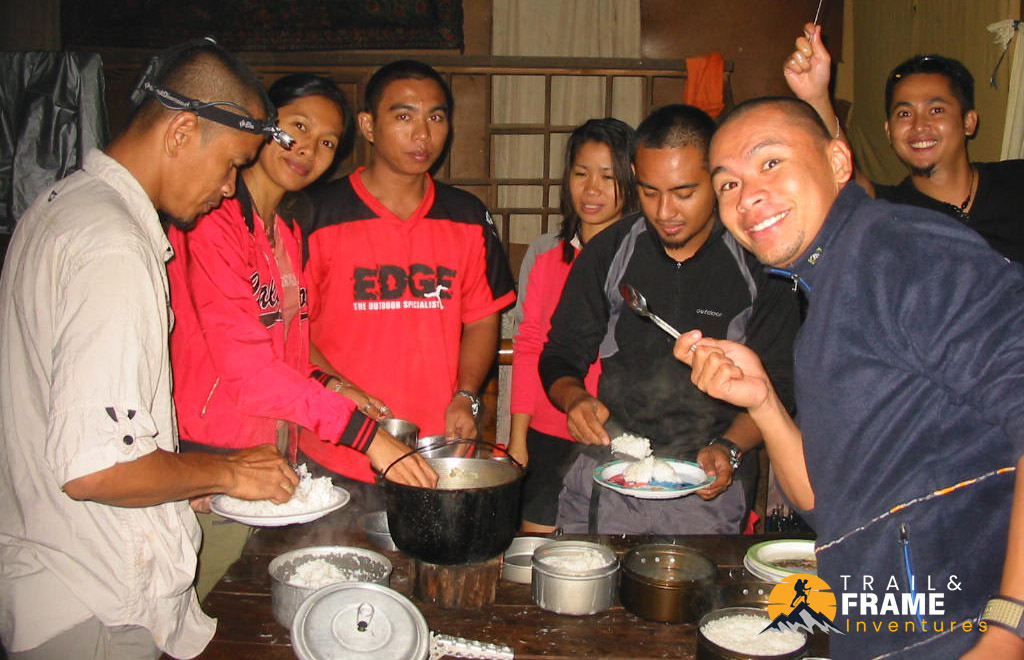
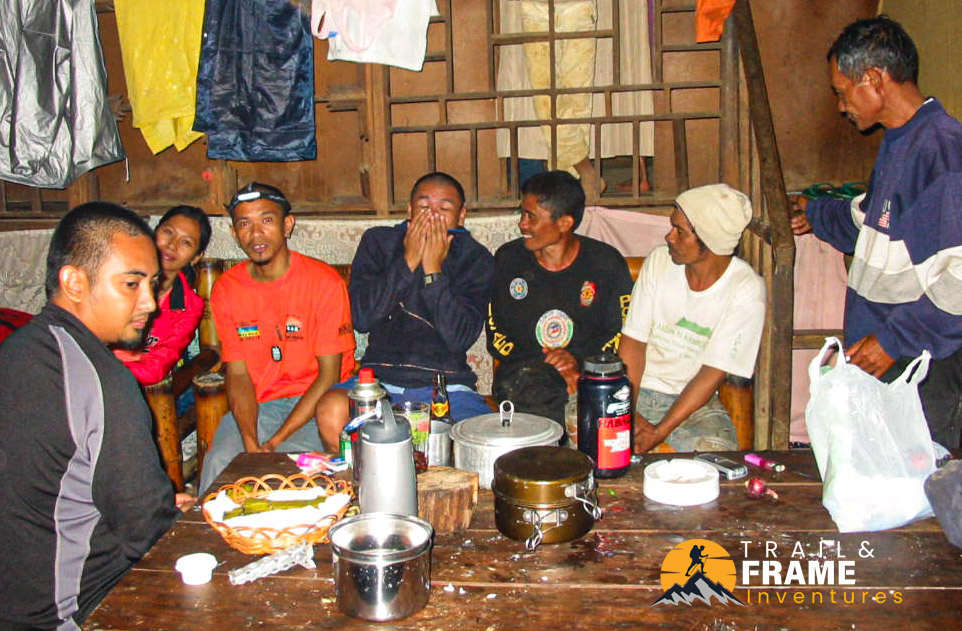
It was during these storytelling sessions that I learned about the legends surrounding D2.
Dulang-Dulang is considered sacred by the tribesfolk and is said to be a playground of deities. Anyone who desecrates the mountain is punished by its godly dwellers. Loud and boisterous climbers, particularly men, are said to be played with by nymphs. According to the stories, a climbing group should include women; otherwise, the team risks getting lost in the forest. More importantly, rituals and offerings to the deities are meant to ask permission for entry and safe passage through the forest.
Truth be told, I had goosebumps listening to these stories. But here we were, already at the foot of the mountain, and there was no turning back.
“There’s no turning back,” I mumbled to myself before going to sleep.
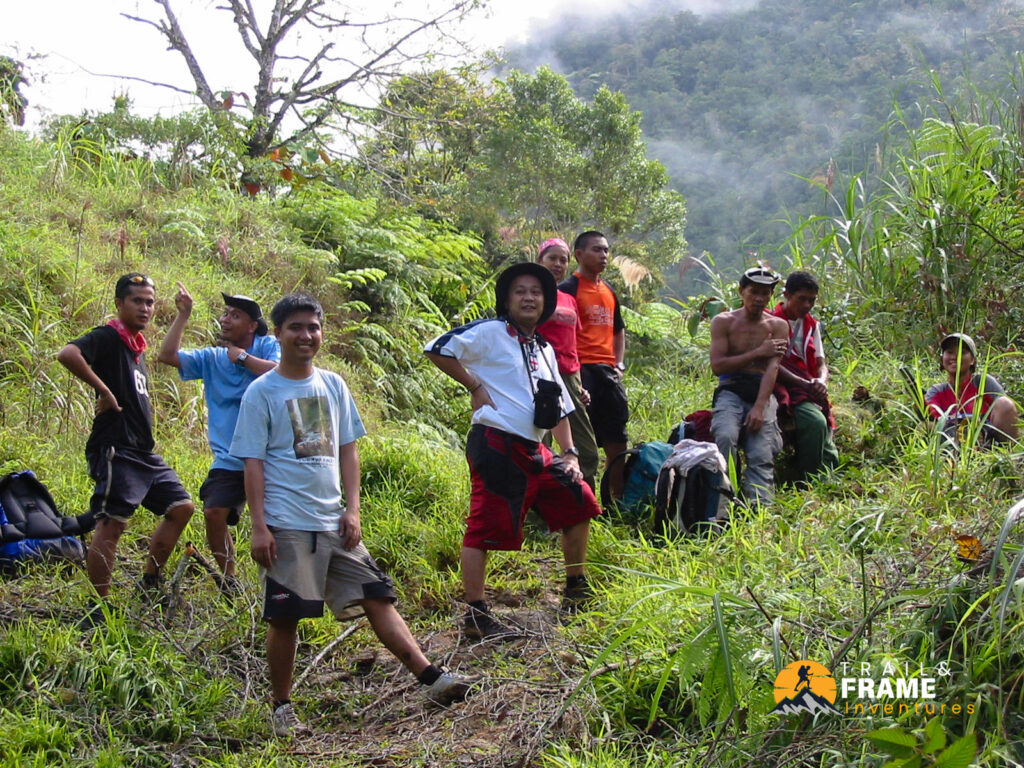
We woke up early in the morning to prepare breakfast and head out for the climb. We said our prayers and bade goodbye to our hosts, who wished us well and a safe climb. In addition to the nine of us, we had two veteran porter-guides, Terry and Jerry. It turned out that these two guides were the most accommodating and guides we had had so far.
By seven-thirty, we were already trekking the one-hour open trail to the foot of D2. That trail was nothing but rough, as the stones and loose muddy soil is challenging even to off-road trucks.
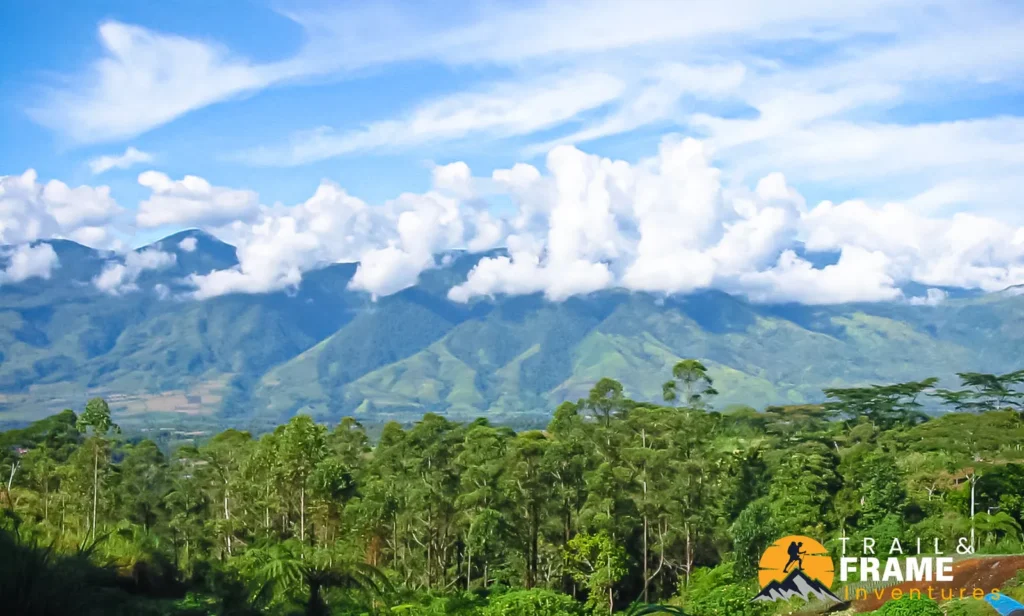
But the 360-degree view along the trail was astounding. Mt. Kilakiron and so many unknown peaks could be seen on our left side. Vegetable plantations flanked the open field on both sides, a common finding on open trails in Bukidnon. I was panting when we reached the foot of D2, so we rested.
But the 360-degree view along the trail was astounding. Mt. Kilakiron and so many unfamiliar peaks stood to our left. Vegetable plantations flanked the open field on both sides, a common sight along the open trails of Bukidnon. By the time we reached the foot of D2, I was already panting heavily, so we stopped to rest.
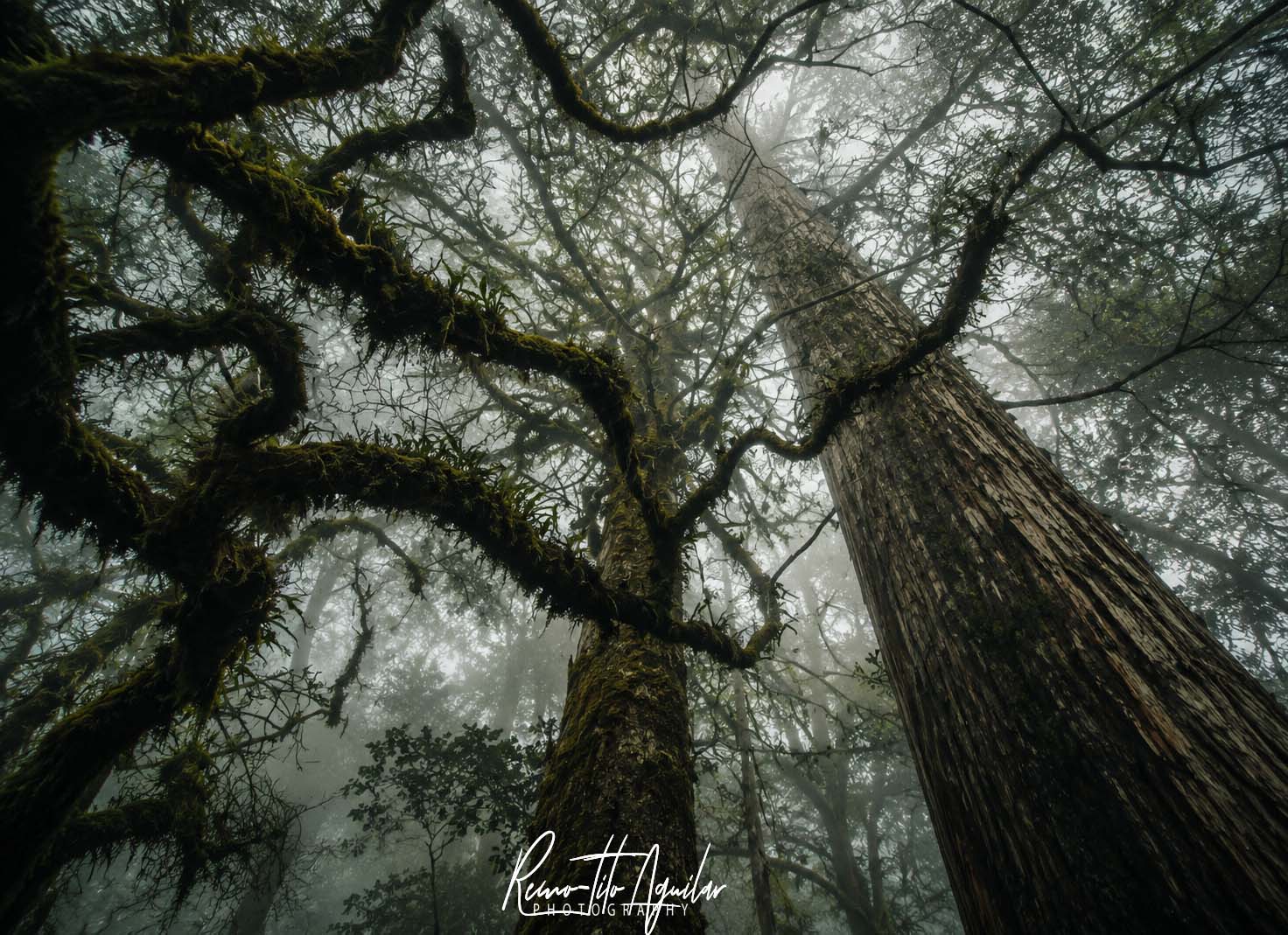
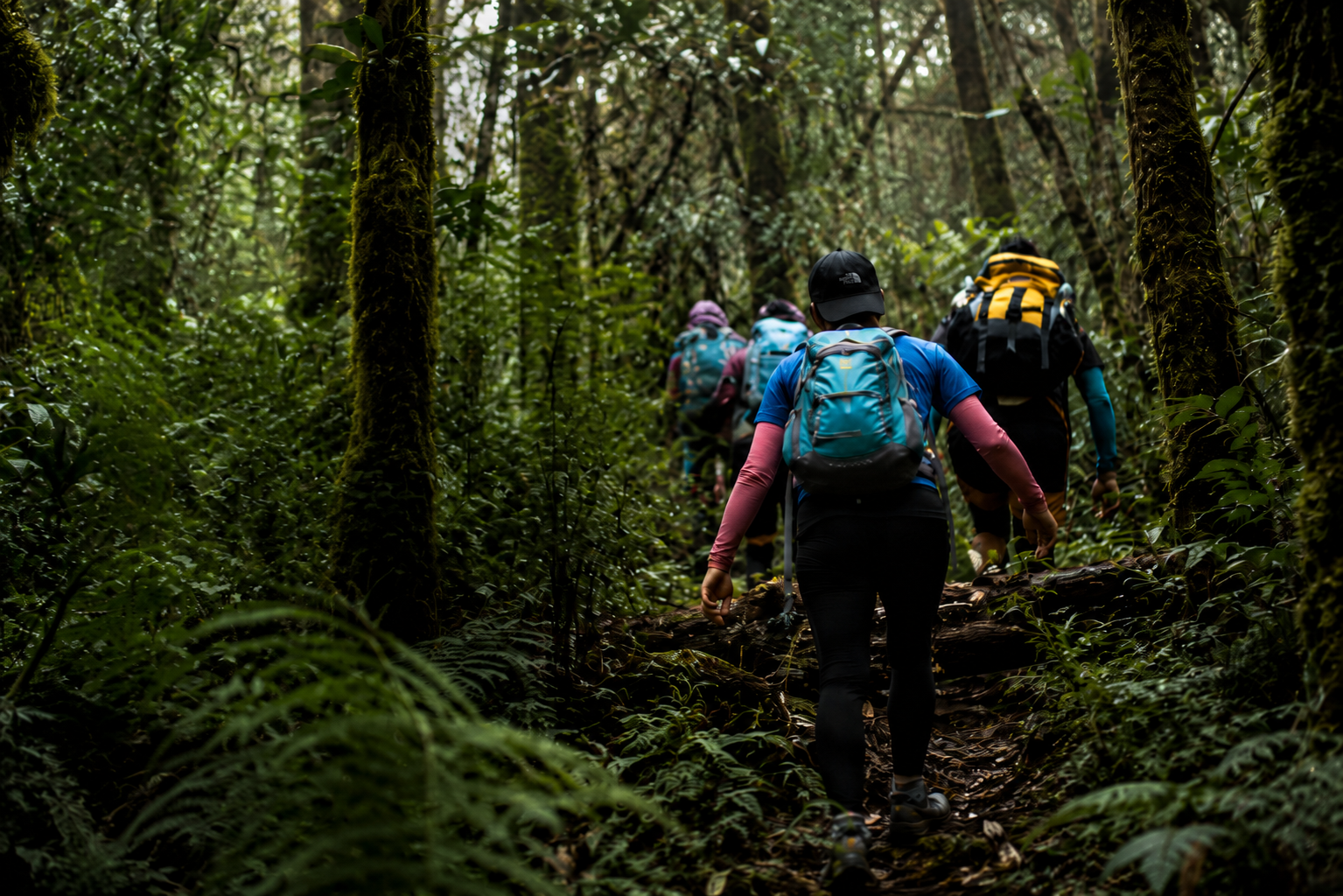
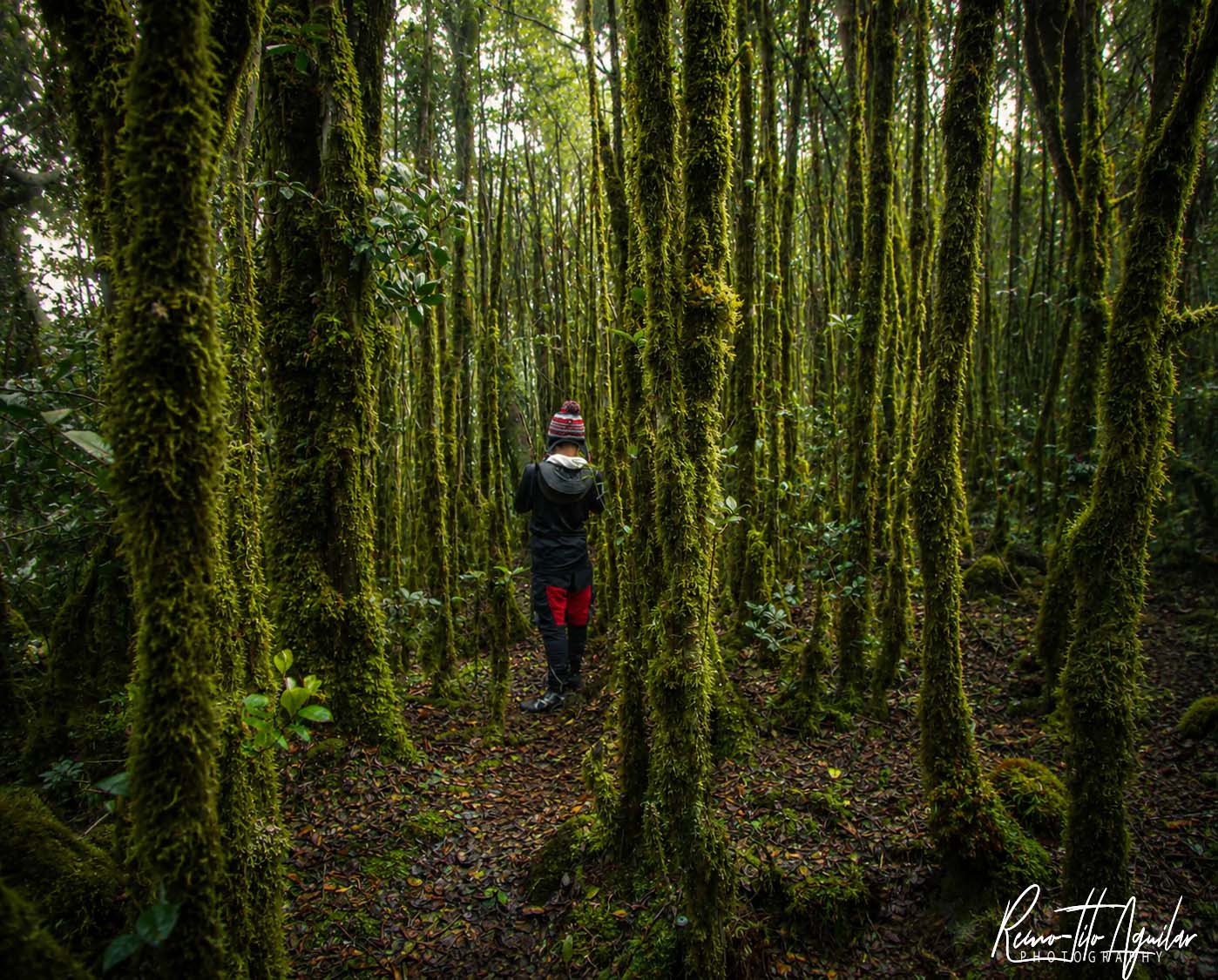
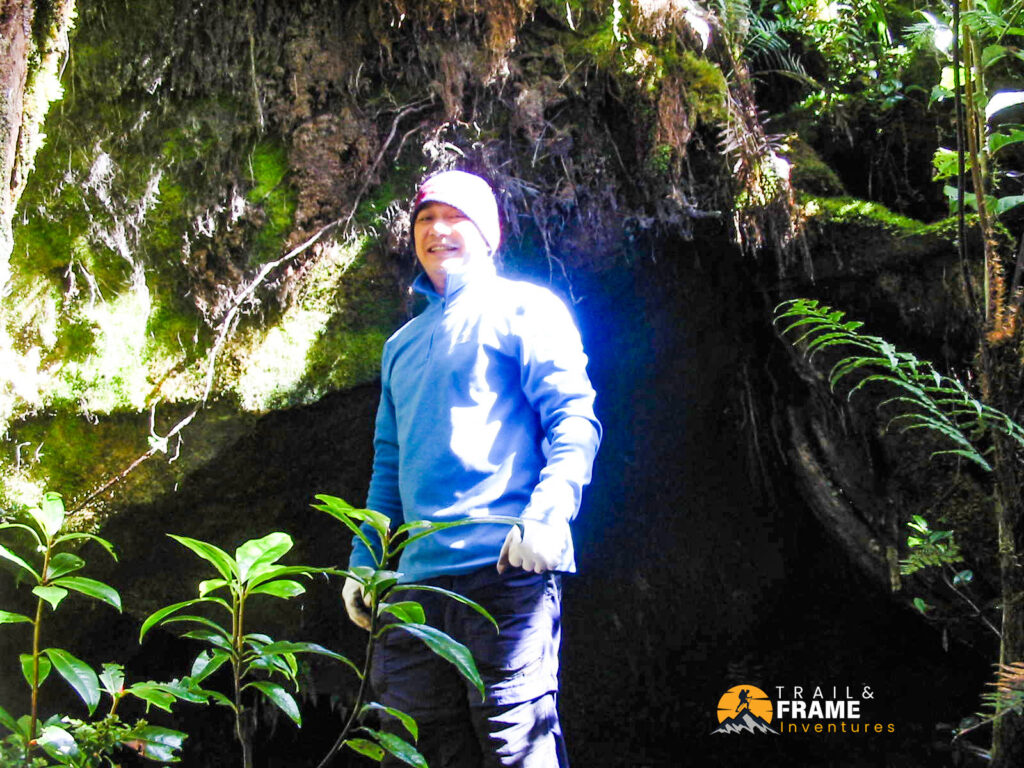
With its tall canopies and cold climate, D2 offered the kind of tropical rainforest that awed us as we made our way along the trail. Moss covered almost everything—tree trunks, roots, and hanging plants. Every now and then, I caught sight of birds crossing our path or flying overhead, but never long enough to identify them.
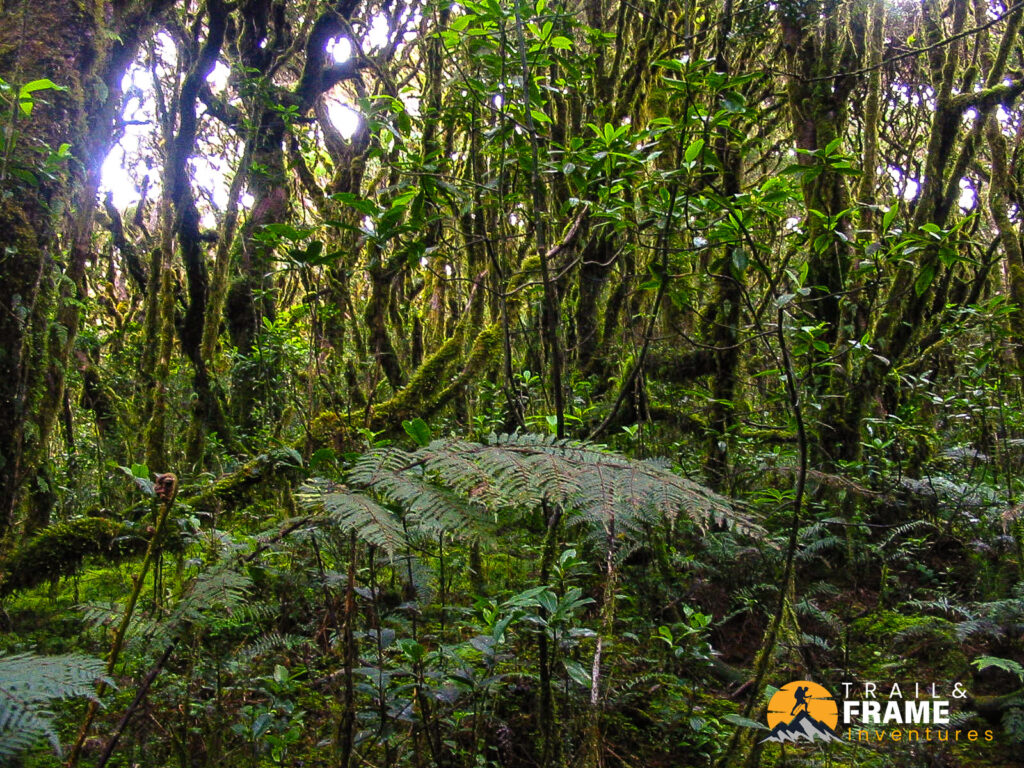
It was my first time walking beneath such a brain-like canopy of towering, moss-laden trees. The experience felt eerie. I couldn’t shake the feeling that the forest had eyes and ears, and that the ground itself was breathing, as though someone were watching us.
“Crazy me,” I thought, for having such ideas.
I was also amazed by how well-preserved and clean the trail was, despite being open to outsiders like us. The mountains were maintained by the Buluongan Tribal Council (BoTriCo), the Kitanglad Guardians and Volunteers (KGV—not the Russian agency), and PAMB. A KGV agent told us they made sure not a single piece of garbage was left on the trail. It wasn’t surprising, then, that I hadn’t seen any rubbish on D2. The KGV people were known for their strict, almost spartan approach to cleaning things up.
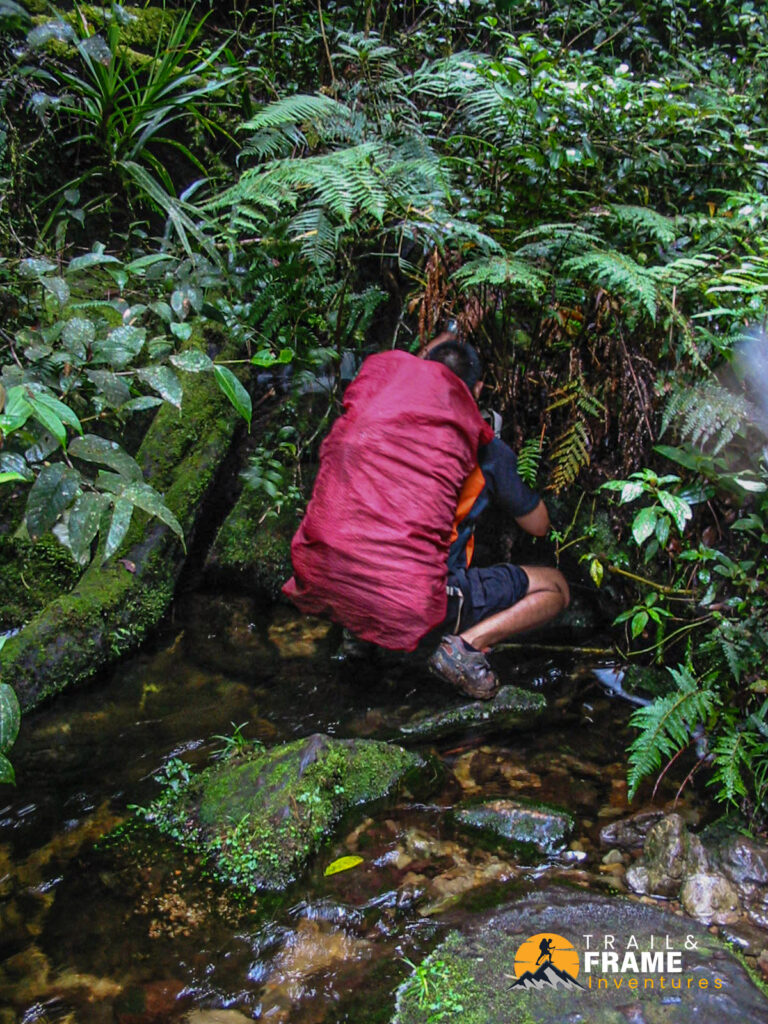
As if trekking without sunshine weren’t enough, rain showers greeted us when we reached our first stop, Alanib River, where we had lunch. The small river had crystal-clear water flowing from an unexplored waterfall just above us. The clearing beside it was an ideal picnic spot, but the unpredictable, on-and-off rain forced us to eat quickly so we could reach the campsite before a heavy downpour.
It was almost as if the rain were teasing us. Every time we started hiking again, it stopped.
Goosebumps!
This cat-and-mouse game with the rain continued for a while as we made our way toward the campsite. Then came another goosebump moment.
I was with the lead pack, along with Yoks and our guide. When the rain fell heavily again, Yoks stopped, opened his backpack, and started removing some of its contents in search of something. He was holding an umbrella in one hand, so I asked him what he was looking for.
“My rain jacket,” he replied.
“What color?” I asked.
“Yellow,” Yoks said.
“Isn’t that what you’re wearing now?”
We both fell silent.
Here was Yoks, a veteran and meticulous climber, with half the contents of his backpack spread out in the rain, searching for a jacket he was already wearing.
Goosebumps.
Then something happened to me that I couldn’t forget.
We had stopped to rest when the rain started again. I was looking for an umbrella I’d borrowed from one of our teammates. There was no gust of wind, no rushing water—just a steady drizzle, enough to keep us wet. I was pretty sure I’d placed the umbrella beside me when we stopped, but it was nowhere to be found.
“Forget it,” I said in frustration. “Let’s keep hiking.”
We walked another twenty metres or so, and there it was, waiting right on our path.
How did it get there?
We were the lead pack. Nobody was ahead of us!
Now this was getting creepy.
The Dulang-Dulang trail was well established. Apart from some steep ascents and the heavy packs we carried, the rest of the trek should have been manageable. But it wasn’t. Maybe it was the rain. Maybe not. All I knew was that I had this eerie feeling that something beyond our understanding was messing with us.
We reached Manny’s Garden, which the locals called the “plaza,” ahead of the others. It was a clearing below the peak where we would camp for the night. It was almost dark, and all I remember were the tall, mossy trees surrounding us, their thick canopy blocking what little sunlight remained.
Then the heavy rain returned, soaking all of us, including those still behind us. The cold was beginning to bite. I was shivering. We pitched our tents as quickly as possible and tried to regulate our body temperatures inside.
I must admit, I hated leaving the tent because of the cold breeze. But the floor of our tent was beginning to sweat, too, with cold water, so I had to bail out.
Our guides put up a temporary tarp shelter in the middle of camp and started a small bonfire to warm us. We hurriedly cooked our food and ate as soon as we could. The cold breeze was killing us. Two of our teammates chose to stay inside their tents rather than face the cold outside.
After eating, we returned to our tents and changed into dry, warm clothes—jackets, gloves, bonnets, and whatever else we had. Rain hammered against the tent. So did the biting cold. It was an eerie feeling. I don’t know how else to describe it.
Jaypee and I shared a tent designed for a single person. It had no rain fly, either. We divided the tent into north and south and slept like shrimps, positioned like yin and yang.
To keep ourselves warm, I brought in our gas stove and lit it from time to time whenever the cold became unbearable. I lost count of how many times I used the stove as a heater that night.
That was when I began to suspect that I had a low tolerance for extreme cold. Maybe it was just D2. Maybe it was the rain. Whatever the reason, I certainly got bitten by the cold that night. It froze my brain to sleep.
Before sunrise, we braved the cold and headed to the ritual place to make our customary offering to the dwellers of D2. I was surprised to find a concrete altar with strips of white cloth hanging from it.
Visitors to the mountain were supposed to tie a strip of white cloth and place coins on the altar to thank the Dulang deities for allowing them to enter their sacred place, for the good weather, and for safe passage. It was also a moment to offer our own personal petitions.
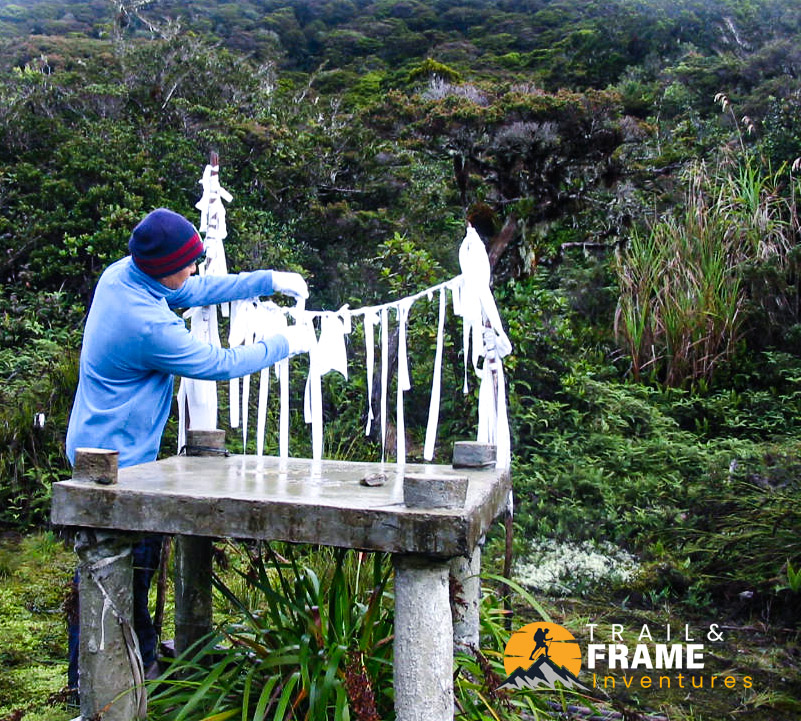
Ian was too sick to join us on the climb to the summit, so he stayed in his tent to rest.
After the ritual, the rest of the team continued toward the peak. We were rewarded with an outstanding sunrise.
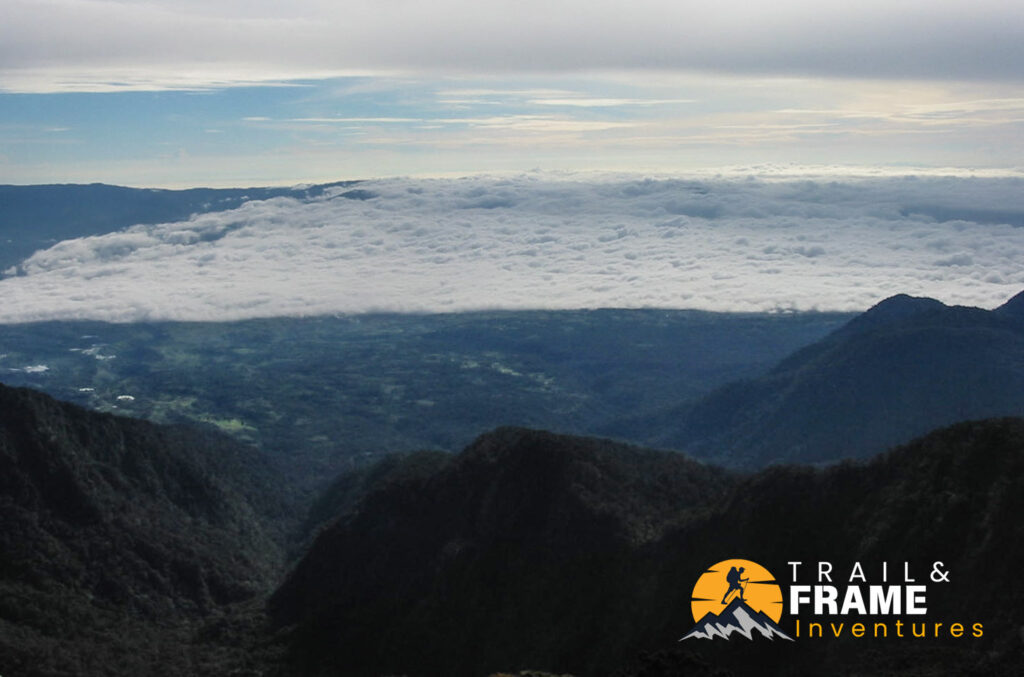
It felt as though I were above the clouds, literally and figuratively. I had never stood on top of a mountain before—much less the Philippines’ second-highest. Despite the brutal cold, the rain, and the eerie feeling from the previous day, we had made it to the summit. And the weather was fantastic.
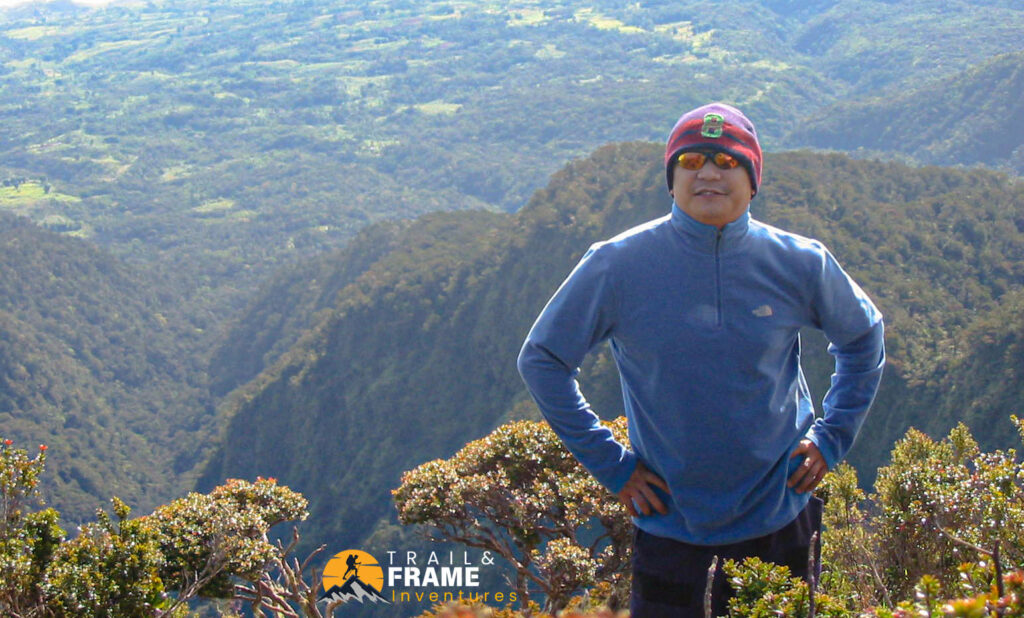
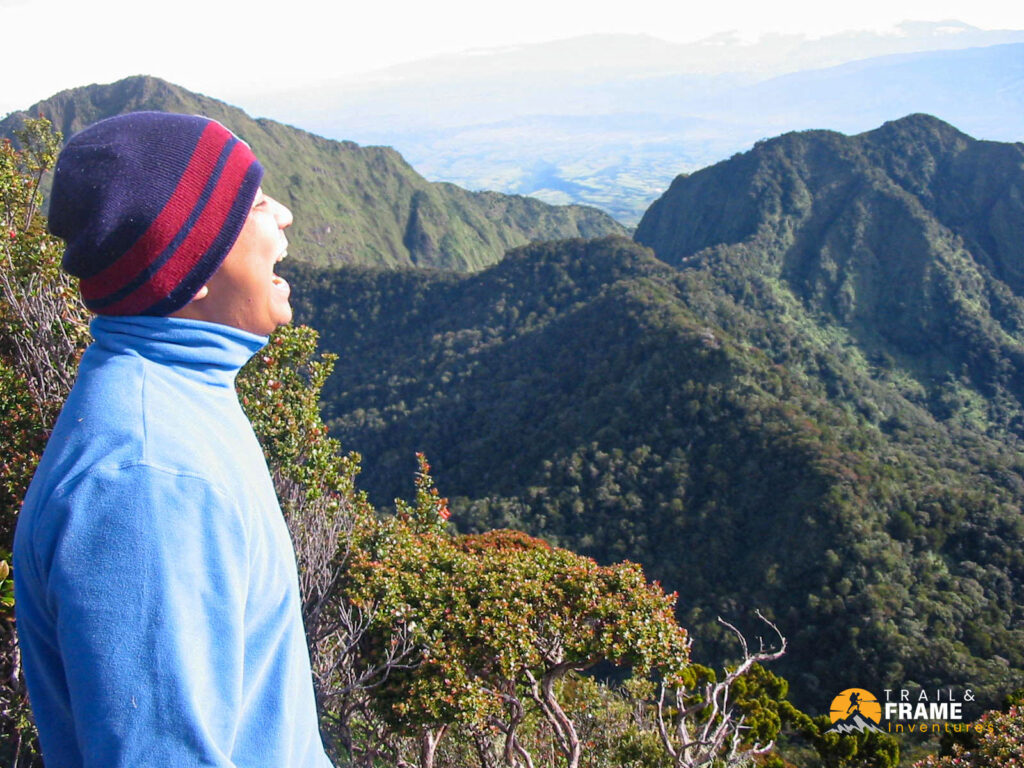
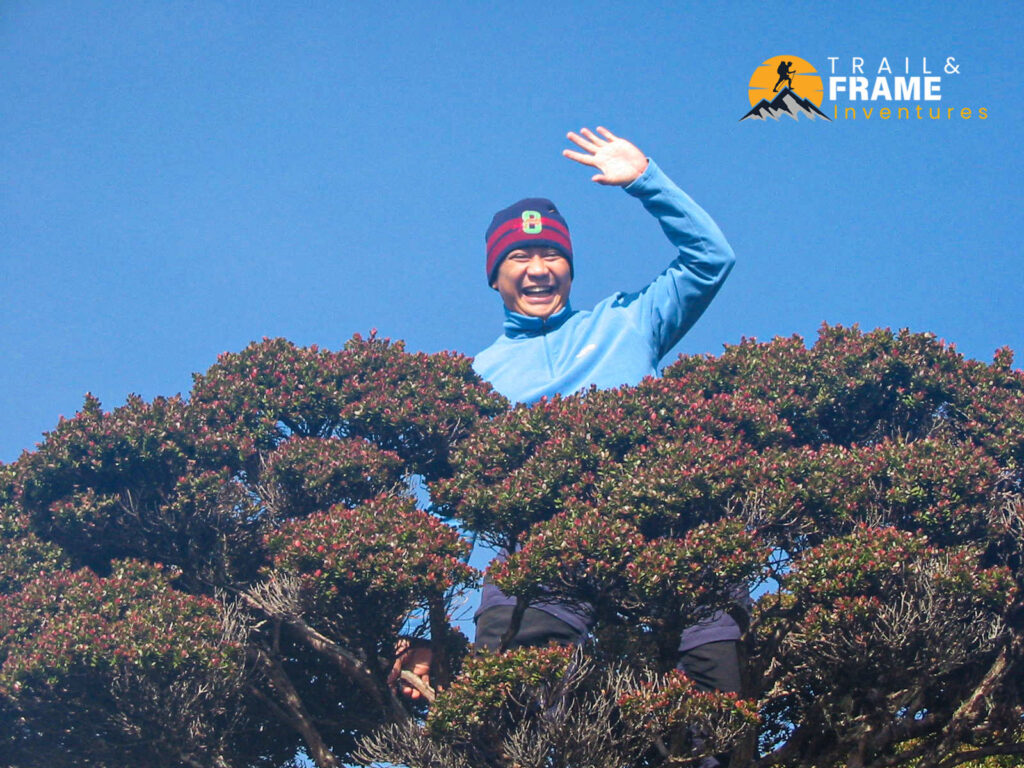
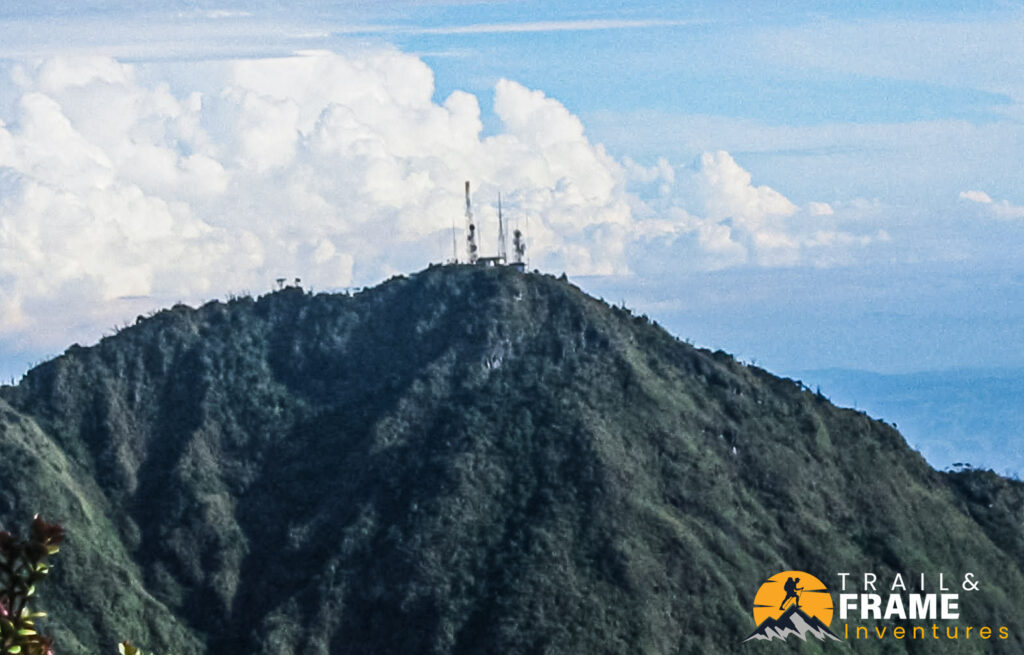
From where we stood, we could see nearby Mt. Kitanglad, Mt. White Peak, Mt. Apo, and so many other peaks I never knew existed. Looking at them rekindled my desire to explore these mountains someday.
At the summit, we brought out a stove and prepared our traditional coffee break. We brewed coffee for everyone while taking turns photographing one another and marvelling at the view.
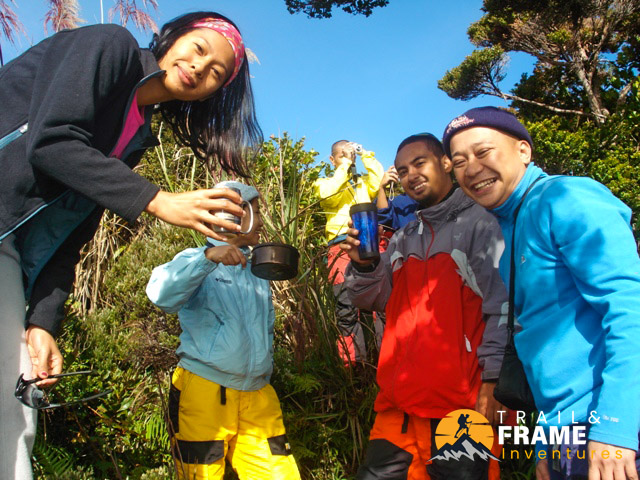
This was probably the best instant coffee I’d ever had in my life.
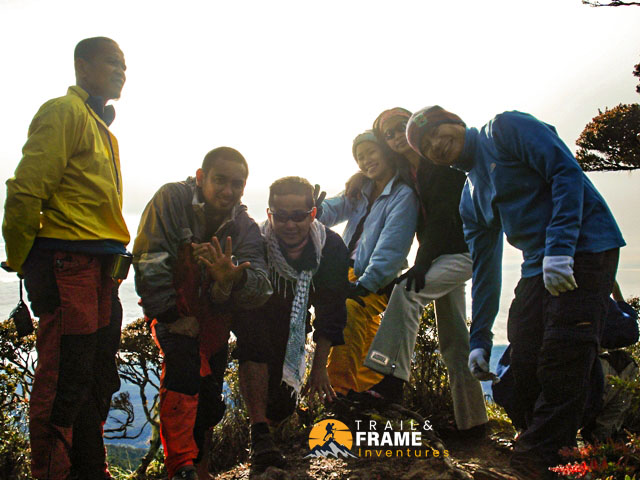
As the traditional jumping and picture-taking continued, we offered prayers and wished for the well-being of our loved ones.
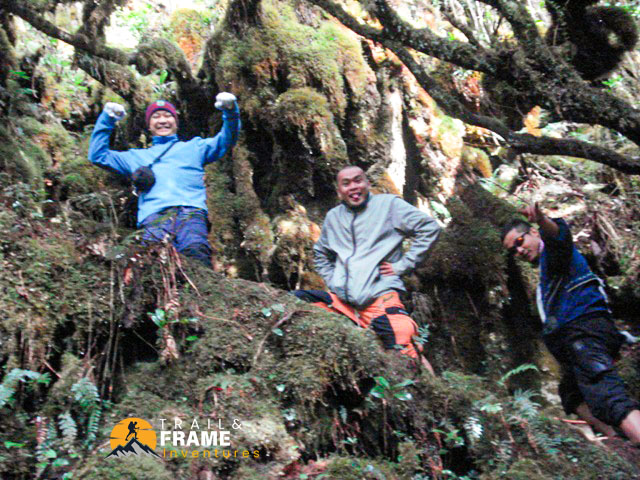
Then we slowly backtracked to our campsite. Along the way, we saw what should have been the connecting trail for our planned traverse. We could only sigh.
Sorry. Not this time.
Back at camp, we ate breakfast and started packing our things. We explored Manny’s Garden a little more. Once again, I marvelled at the tall, moss-covered trees, their high branches interwoven with those of neighbouring trees to form brain-like canopies. The ground was carpeted in green moss, damp and wet.
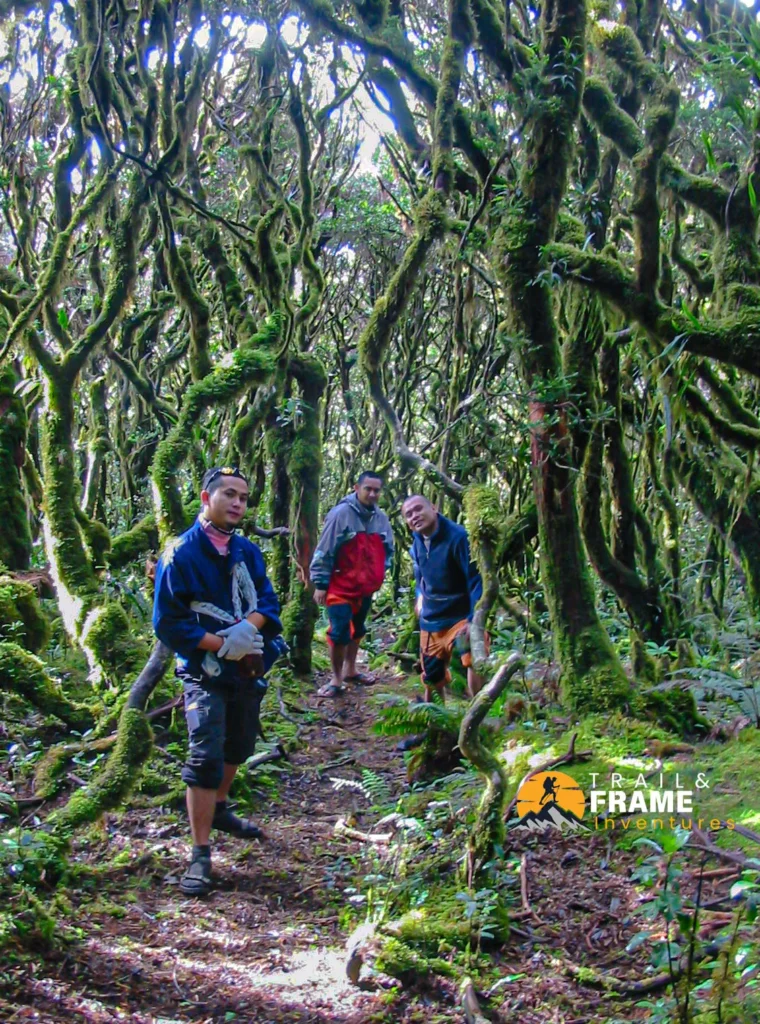
“This place is protecting its dwellers,” I told myself.
But I couldn’t see any.
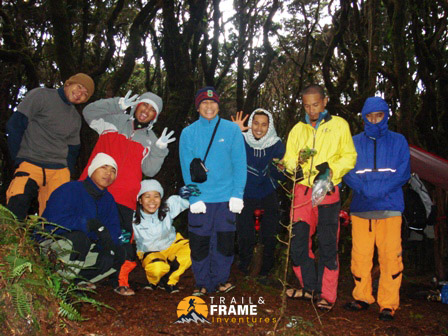
After taking a few more pictures, we offered our final thanks to the mountain dwellers for the safe trek and the good weather. Then we headed down.
It took us just an hour to reach Alanib River, where we stopped for lunch again. From there, it took another hour and a half to reach the tribal leader’s house. As soon as we arrived, the rain came pouring down.
We thanked our host and our guides and gave them our tokens—rain gear and gloves. They were grateful, but we were even more thankful for their help.
When the rain finally stopped, we headed for the jeepney stop and rode back toward Malaybalay City.
“Wow, what an experience,” I said. But I thought this was just the beginning of my mountain quest.
That evening, while we were having dinner, Mayette mentioned that she had seen another lady sitting beside us at Alanib River.
I got goosebumps all over again.
Then Onin shared another story. Even our guides had experienced something they couldn’t explain. They had gone looking for fallen branches to use for the bonfire, only to discover that their bolos, which had been sheathed at their waists, were nowhere to be found. They searched but couldn’t find them that night.
The next morning, they found the bolos neatly placed on top of a tree.
Chris also told us that Ian and Onin’s tent had kept calling out to him from another tent, as if someone inside were having a conversation. Onin insisted that he had been talking to Chris, but Chris swore he had been asleep long before Ian and Onin turned in.
These stories gave me even more goosebumps.
Maybe Dulang really was the City of Fairies after all.
Author’s Note
I wrote this account as I experienced it, not as a factual investigation into the paranormal. As a man of science and medicine, I tend to be skeptical. But I also have deep respect for local beliefs, traditions, and cultures. As visitors to their mountain, I felt it was not my place to dismiss what was shared with us. I’ll leave it at that.
This post is not intended to sensationalize the paranormal or hype Mt. Dulang-Dulang as a mysterious place. It is simply the account of a newbie climber’s first experience on D2—complete with the stories we heard, the strange things we encountered, and the goosebumps that came with them.